

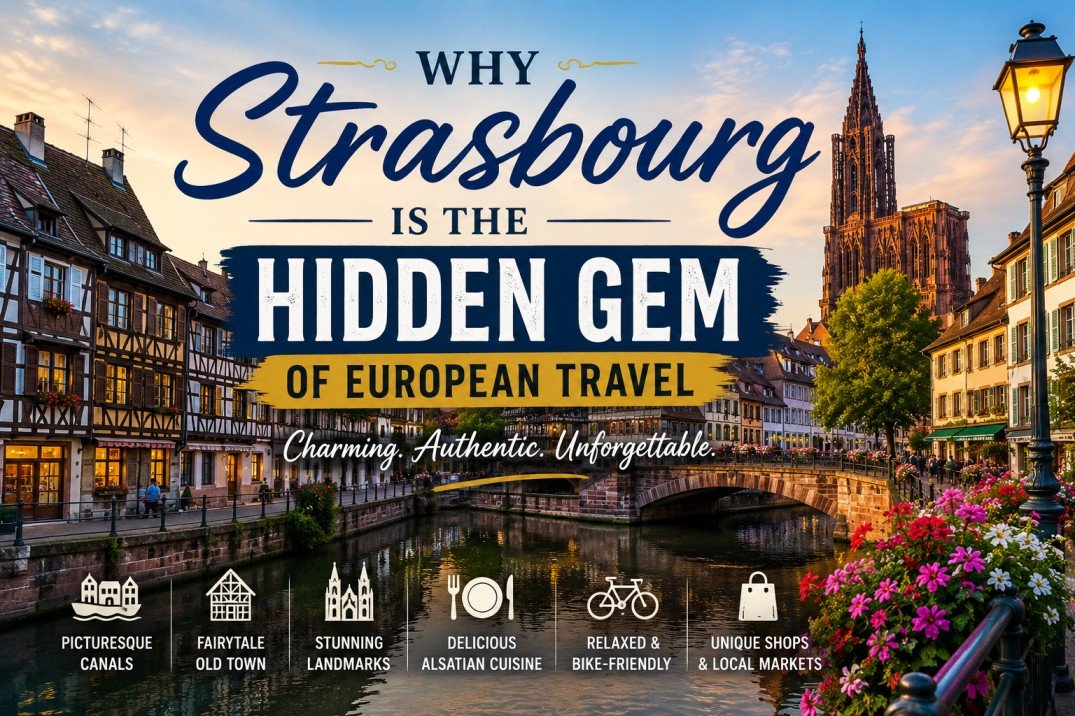
Strasbourg, the capital of France’s Alsace region, is more than just a picturesque city it’s a cultural crossroads where French elegance meets Germanic charm. Nestled along the Rhine River and just a stone’s throw from the German border, Strasbourg travel offers an unforgettable blend of history, architecture, cuisine, and European diplomacy. Whether you’re strolling through its cobbled streets, marveling at Gothic spires, or sipping local Riesling in a timber-framed bistro, Strasbourg captivates every traveler with its unique identity. This city isn’t just a destination; it’s an experience that lingers long after you’ve left.
From its UNESCO-listed Grande Île to its role as the official seat of the European Parliament, Strasbourg stands out as a symbol of unity and heritage. Travelers seeking authenticity, rich history, and a relaxed pace will find Strasbourg travel both refreshing and deeply rewarding. With its compact layout, excellent public transport, and pedestrian-friendly zones, exploring Strasbourg is effortless even for first-time visitors.
Discover the Heart of Strasbourg: Grande Île
The Grande Île is the historic core of Strasbourg and the undisputed centerpiece of any Strasbourg travel itinerary. Recognized as a UNESCO World Heritage Site since 1988, this island in the Ill River is a living museum of medieval and Renaissance architecture. Wandering its narrow lanes feels like stepping back in time, yet the area buzzes with modern life cafés, boutiques, and street performers add vibrancy to every corner.
At the island’s heart stands the iconic Cathédrale Notre-Dame de Strasbourg, a masterpiece of Gothic architecture. Its intricate façade, astronomical clock, and panoramic views from the platform are not to be missed. The cathedral alone could justify a trip, but the surrounding squares like Place du Château and Place Kléber offer equally enchanting atmospheres. Don’t miss the Maison Kammerzell, a 16th-century half-timbered house now housing a restaurant, where diners can enjoy Alsatian specialties beneath centuries-old beams.
Top Attractions on Grande Île
- Strasbourg Cathedral – Climb the 332 steps for a breathtaking city view.
- Petite France District – A fairy-tale neighborhood with canals and flower-lined bridges.
- Musée Alsacien – Explore traditional Alsatian homes and folk art.
- Place Gutenberg – Named after the printing pioneer, surrounded by cafés and shops.
Strasbourg Travel: A Cultural Crossroads
Strasbourg’s location has made it a cultural melting pot for centuries. Once part of the Holy Roman Empire, later annexed by France, and frequently contested between nations, the city reflects a fascinating blend of French and German influences. This duality is evident in its language, food, and even its street signs often bilingual in French and Alsatian, a Germanic dialect.
During your Strasbourg travel, you’ll notice how seamlessly these cultures coexist. The city’s architecture features pointed Gothic arches alongside half-timbered houses typical of Germanic towns. The cuisine, too, tells a story: choucroute garnie (sauerkraut with sausages and pork) and tarte flambée (a thin, crispy pizza-like dish) are local staples with roots in both traditions.
Beyond aesthetics, Strasbourg is a beacon of European unity. Home to the European Parliament, the Council of Europe, and the European Court of Human Rights, the city plays a vital role in shaping continental policy. The European Quarter, located across the river in the Neustadt district, offers guided tours and exhibitions that provide insight into the workings of the EU.
Cultural Highlights Not to Miss
- Palais Rohan – A baroque palace housing three museums: Fine Arts, Archaeological, and Decorative Arts.
- Opéra National de Strasbourg – One of France’s oldest opera houses, offering world-class performances.
- Marché aux Poissons – A historic fish market turned cultural square with cafés and events.
- Fêtes de l’Oeuf – An annual Easter festival celebrating local traditions with music and food.
Exploring Strasbourg’s Neighborhoods
While Grande Île is the star, Strasbourg’s surrounding neighborhoods offer distinct flavors and experiences. Each district has its own personality, making Strasbourg travel a journey of discovery beyond the postcard views.
Neustadt, built during the German annexation in the late 19th century, features wide boulevards, grand public buildings, and elegant parks. This area showcases German imperial architecture, with structures like the Palais du Rhin and the National and University Library. It’s a quieter, more residential part of town, perfect for a leisurely stroll or a picnic in Parc de l’Orangerie.
Krutenau, known as the “Vegetable Garden,” is a bohemian riverside district with a youthful vibe. Lined with cafés, art galleries, and student hangouts, it’s ideal for evening walks along the Ill River. The area comes alive in summer with open-air concerts and food festivals.
Robertsau and Wacken offer a more suburban feel, with tree-lined streets and access to green spaces like the Parc de la Citadelle. These areas are great for travelers seeking a local perspective, with markets, bakeries, and community events that reflect everyday Alsatian life.
Neighborhood Guide for Travelers
- Petite France – Best for romantic walks and photo ops.
- Neustadt – Ideal for architecture lovers and history buffs.
- Krutenau – Perfect for foodies and nightlife seekers.
- European Quarter – Must-visit for those interested in politics and EU affairs.
Strasbourg Travel: Food and Drink Like a Local
No Strasbourg travel experience is complete without indulging in its culinary delights. Alsatian cuisine is hearty, flavorful, and deeply rooted in tradition. The region’s proximity to Germany means dishes often feature sausages, sauerkraut, and rich sauces, but with a distinctly French finesse.
Start your day with a kougelhopf, a sweet, yeasted cake studded with raisins and almonds, best enjoyed with coffee at a sidewalk café. For lunch, try tarte flambée a thin crust topped with crème fraîche, onions, and bacon cooked in a wood-fired oven. It’s a local favorite, especially in Petite France.
Dinner calls for choucroute garnie, the region’s signature dish. This isn’t just sauerkraut it’s a carefully prepared medley of fermented cabbage, smoked pork, sausages, and potatoes, often served with a glass of dry Riesling. Pair it with a pinot gris or gewürztraminer from nearby vineyards like those in Ribeauvillé or Eguisheim.
Don’t forget dessert: baeckeoffe</ is a slow-cooked meat and potato stew, while schwarzwaldertorte (Black Forest cake) reflects the German influence. For a sweet treat, visit a confiserie for marzipan, gingerbread, or bredele traditional Christmas cookies available year-round in many shops.
Must-Try Alsatian Dishes
- Choucroute garnie – The ultimate comfort food.
- Tarte flambée – Crispy, creamy, and addictive.
- Baeckeoffe – A hearty casserole perfect for cold days.
- Kougelhopf – A sweet bread ideal for breakfast or tea.
- Riesling wine – Crisp, aromatic, and food-friendly.
Best Time to Visit Strasbourg
The ideal time for Strasbourg travel depends on your preferences, but each season offers something special. Spring (April to June) brings mild weather, blooming gardens, and fewer crowds. The city’s parks, like Parc de l’Orangerie and Jardin Botanique, are at their most vibrant, and outdoor cafés begin to fill with locals enjoying the sunshine.
Summer (July to August) is peak tourist season, with long days and a packed events calendar. The Strasbourg Music Festival, open-air cinema, and river cruises are highlights. However, temperatures can rise, and popular spots like the cathedral and Petite France can get crowded.
Autumn (September to October) is a favorite among locals. The weather remains pleasant, the summer crowds thin out, and the vineyards in nearby Alsace begin their harvest. Wine festivals and food markets celebrate the season’s bounty.
Winter (November to February) transforms Strasbourg into a festive wonderland. The Christkindelsmärik, one of Europe’s oldest and most enchanting Christmas markets, lights up the city from late November through December. Thousands of visitors come to admire the decorations, sip mulled wine, and shop for handmade gifts. Even in January and February, the city’s charm persists, with cozy bistros and indoor museums offering warmth and culture.
Seasonal Travel Tips
- Spring – Pack layers; weather can be unpredictable.
- Summer – Book accommodations early; consider early morning visits to popular sites.
- Autumn – Ideal for wine tours and hiking in the Vosges Mountains.
- Winter – Bring warm clothing; enjoy the magic of the Christmas market.
Getting Around Strasbourg
Strasbourg is one of the most walkable cities in Europe, especially in the historic center. Most major attractions are within a 20-minute walk of each other, making Strasbourg travel convenient and enjoyable on foot. The city’s flat terrain and well-maintained sidewalks add to its pedestrian-friendly appeal.
For longer distances, Strasbourg has an efficient public transportation system. The CTS (Compagnie des Transports Strasbourgeois) operates trams, buses, and a bike-sharing program called Vélhop’. A single ticket costs around €1.80 and is valid for 90 minutes across all modes. Day passes and multi-day tickets offer better value for tourists.
The tram network is particularly reliable, with lines connecting the city center to suburbs, the train station, and the European Quarter. Trams run frequently, even late at night, making it easy to return from evening events or dinners.
Cycling is also popular. Strasbourg boasts over 600 kilometers of bike paths, and Vélhop’ stations are located throughout the city. Renting a bike is an eco-friendly way to explore, especially along the riverbanks or to nearby towns like Kehl (Germany) via the Passerelle des Deux Rives footbridge.
Transportation Options at a Glance
- Walking – Best for Grande Île and Petite France.
- Tram – Fast and covers most tourist areas.
- Bus – Useful for reaching outer neighborhoods.
- Vélhop’ – Bike-sharing for short trips.
- Taxi/Rideshare – Available but more expensive.
Day Trips from Strasbourg
Strasbourg’s central location makes it an excellent base for exploring the wider Alsace region. A Strasbourg travel itinerary can easily include day trips to charming villages, vineyards, and natural landscapes.
The Alsace Wine Route (Route du Vin d’Alsace) stretches over 170 kilometers through picturesque villages like Riquewihr, Eguisheim, and Colmar. Each town offers wine tastings, half-timbered houses, and seasonal festivals. Riquewihh, often called the “Pearl of Alsace,” is particularly photogenic, with its flower-decorated streets and medieval fortifications.
Just 30 minutes by train, Colmar is another must-visit. Known as “Little Venice” for its canals and colorful houses, it’s smaller and quieter than Strasbourg but equally enchanting. The Unterlinden Museum, home to the Isenheim Altarpiece, is a cultural highlight.
For nature lovers, the Vosges Mountains offer hiking, cycling, and panoramic views. The Ballon d’Alsace and Lac du Bleymard are popular destinations. In winter, nearby ski resorts like La Bresse and Gérardmer provide alpine fun just an hour away.
Top Day Trip Destinations
- Colmar – 30 min by train; fairy-tale canals and art.
- Riquewihr – 45 min by car; wine tastings and medieval charm.
- Eguisheim – 40 min by car; circular village layout and vineyards.
- Kehl (Germany) – 15 min by tram; cross-border shopping and riverside walks.
- Vosges Mountains – 1 hour by car; hiking and scenic drives.
Key Takeaways for Strasbourg Travel
- Strasbourg is a cultural hybrid of French and German influences, offering a unique European experience.
- The Grande Île and Petite France are must-see historic districts with stunning architecture and charm.
- Alsatian cuisine like choucroute and tarte flambée is a highlight of any visit.
- The city is pedestrian-friendly, with excellent tram and bike options for getting around.
- Strasbourg is a gateway to the Alsace Wine Route and other picturesque towns.
- The Christmas market is one of the best in Europe, drawing visitors from around the world.
- As the seat of the European Parliament, Strasbourg plays a key role in continental politics.
FAQ: Strasbourg Travel Essentials
What is the best way to get to Strasbourg?
Strasbourg is well-connected by air, rail, and road. Strasbourg Airport (SXB) offers flights from major European cities. The Strasbourg-Ville train station is a major hub with high-speed TGV connections to Paris (1h 45min), Frankfurt (1h 30min), and other cities. Driving is also convenient, with good highway links from France, Germany, and Switzerland.
Is Strasbourg safe for tourists?
Yes, Strasbourg is generally very safe. Like any European city, pickpocketing can occur in crowded areas like the Christmas market or public transport. Stay aware of your surroundings, especially at night, and keep valuables secure. Overall, the city is welcoming and tourist-friendly.
Do I need to speak French to visit Strasbourg?
While French is the official language, many locals speak English, especially in tourist areas. In the European Quarter, multilingualism is common. Learning a few basic French phrases like “Bonjour,” “Merci,” and “Parlez-vous anglais?” is appreciated and enhances your experience.
Final Thoughts: Why Strasbourg Should Be on Your Travel List
Strasbourg travel is more than a trip it’s an immersion into a city where history, culture, and modernity coexist in harmony. Whether you’re drawn by its Gothic cathedral, its role in European politics, or its legendary Christmas market, Strasbourg offers something for every traveler. Its compact size, rich heritage, and warm hospitality make it an ideal destination for first-time visitors and seasoned explorers alike.
From the moment you step onto the cobblestones of Petite France to the taste of your first glass of Riesling, Strasbourg leaves a lasting impression. It’s a city that invites you to slow down, savor the moment, and discover the beauty in everyday details. So pack your bags, bring your curiosity, and let Strasbourg surprise you.

