

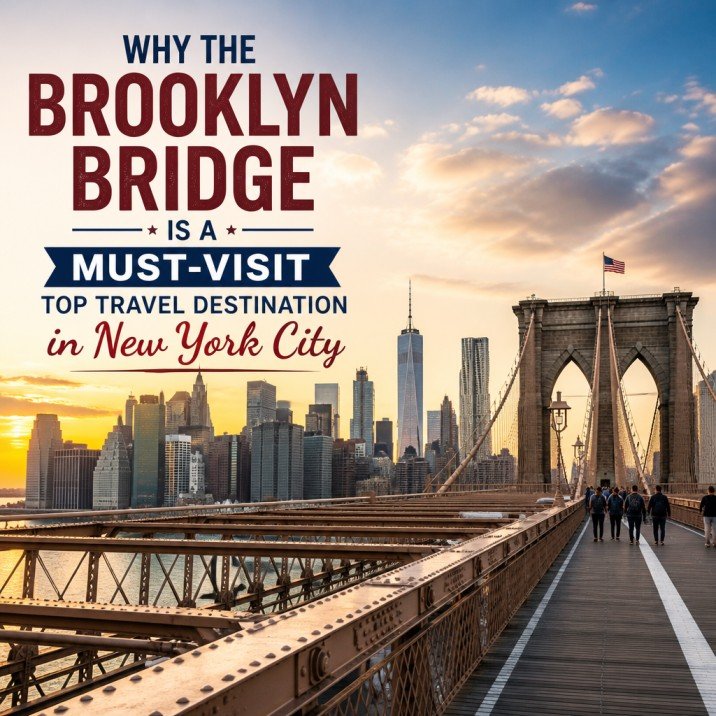
The Brooklyn Bridge isn’t just a historic landmark it’s a living symbol of innovation, resilience, and urban beauty. As one of the most iconic top travel destinations in New York City, the Brooklyn Bridge draws millions of visitors each year who come to walk its elevated pedestrian path, snap photos of the skyline, and soak in over 140 years of history. Whether you’re a first-time traveler or a seasoned explorer, standing on this engineering marvel offers an unforgettable experience that blends culture, architecture, and breathtaking views.
From its Gothic-style stone towers to the sweeping vistas of Lower Manhattan and the East River, the Brooklyn Bridge delivers more than just a crossing it provides a journey through time. It’s not only a functional piece of infrastructure but also a cultural touchstone that has appeared in countless films, songs, and works of art. For travelers seeking authentic New York moments, this bridge is non-negotiable on any itinerary.
What makes the Brooklyn Bridge a top travel destination isn’t just its visual appeal. It’s the convergence of history, accessibility, and panoramic scenery. Open 24/7 and free to access, the bridge welcomes walkers and cyclists alike, offering a rare pedestrian-friendly escape in the heart of a bustling metropolis. Whether you’re visiting at sunrise, midday, or under the glow of city lights at night, the experience remains uniquely New York.
Top Travel Destinations Around the Brooklyn Bridge
While the Brooklyn Bridge itself is a major attraction, the surrounding area is packed with other top travel destinations that enhance the overall visitor experience. Exploring these nearby spots allows travelers to immerse themselves fully in the culture and energy of Lower Manhattan and DUMBO (Down Under the Manhattan Bridge Overpass).
DUMBO: The Heart of Brooklyn’s Waterfront Revival
DUMBO has transformed from an industrial zone into one of Brooklyn’s most vibrant neighborhoods and a top travel destination in its own right. Located just steps from the Brooklyn Bridge’s Brooklyn-side entrance, DUMBO offers cobblestone streets, converted warehouses, art galleries, and some of the best views of the Manhattan skyline.
- Jane’s Carousel: A beautifully restored 1920s carousel housed in a glass pavilion, offering nostalgic fun for families and Instagram-worthy moments.
- Empire Stores: A historic warehouse turned mixed-use space featuring shops, restaurants, and public plazas with river views.
- Time Out Market: A food hall showcasing Brooklyn’s best chefs and eateries, perfect for refueling after a bridge walk.
Walking through DUMBO feels like stepping into a modern urban postcard. The juxtaposition of old brick buildings against the sleek Manhattan skyline creates a visual harmony that’s hard to find elsewhere. It’s no surprise that DUMBO is a favorite filming location and a hotspot for photographers.
Brooklyn Bridge Park: A Green Oasis with Skyline Views
Spanning 85 acres along the East River, Brooklyn Bridge Park is one of the city’s most celebrated public spaces and a top travel destination for locals and tourists alike. The park features playgrounds, sports fields, picnic areas, and multiple piers that offer unobstructed views of the Brooklyn Bridge and Lower Manhattan.
Visitors can stroll along the waterfront promenade, rent a kayak, or relax on the grass with a view of the bridge’s towering granite anchors. The park’s thoughtful design preserves the area’s industrial past while creating a sustainable, community-focused space. Seasonal events, outdoor movies, and art installations keep the energy high year-round.
One of the park’s standout features is Pier 1, which offers one of the most photographed angles of the Brooklyn Bridge. Whether you’re watching the sunset or catching the morning light on the towers, this spot delivers a quintessential New York moment.
South Street Seaport: A Historic Waterfront District
On the Manhattan side of the bridge, the South Street Seaport offers a different flavor of New York history. This revitalized district combines maritime heritage with modern shopping and dining. The seaport features historic ships, including the Pioneer schooner and the Wavertree iron-hulled ship, docked at the South Street Seaport Museum.
Visitors can explore cobblestone streets lined with boutiques, seafood restaurants, and street performers. The area also hosts seasonal markets and cultural events, making it a dynamic stop for travelers. The proximity to the Brooklyn Bridge makes it easy to combine a visit to both landmarks in one trip.
For those interested in New York’s maritime past, the South Street Seaport provides context and charm that complements the engineering marvel of the bridge. It’s a reminder that the city’s growth has always been tied to its waterways.
The Brooklyn Bridge: A Journey Through Time and Architecture
Completed in 1883, the Brooklyn Bridge was the world’s first steel-wire suspension bridge and a groundbreaking feat of engineering. Designed by John A. Roebling and completed by his son Washington Roebling and daughter-in-law Emily Warren Roebling, the bridge connected Manhattan and Brooklyn at a time when the two were separate cities.
Its construction was fraught with challenges, including caisson disease (the “bends”) among workers and public skepticism about its stability. Yet, the bridge stood strong, becoming a symbol of American ingenuity and perseverance. Today, it remains one of the oldest roadway bridges in the United States and a National Historic Landmark.
The bridge’s design blends functionality with artistry. Its two neo-Gothic stone towers rise 278 feet above the East River, connected by steel cables that support the roadway. The intricate cable patterns and arched entrances give the bridge a cathedral-like presence, especially when viewed from below or at night when it’s illuminated.
Walking across the Brooklyn Bridge is more than a physical journey it’s a step into history. The pedestrian promenade, elevated above the vehicular traffic, offers a peaceful path with interpretive signs detailing the bridge’s construction and cultural impact. It’s a rare opportunity to experience a piece of 19th-century engineering up close.
Best Times to Visit the Brooklyn Bridge
Timing your visit can dramatically enhance your experience at this top travel destination. The Brooklyn Bridge is accessible year-round, but certain times offer better lighting, fewer crowds, and more comfortable conditions.
- Early Morning (6:00–8:00 AM): Ideal for photographers and those seeking solitude. The soft morning light casts a golden glow on the towers, and the city is still waking up.
- Sunset (6:00–8:00 PM): One of the most popular times to visit. The sky transforms into vibrant hues, and the bridge is beautifully lit as Manhattan’s skyline begins to sparkle.
- Nighttime (After 9:00 PM): The bridge is illuminated with soft white lights, creating a magical atmosphere. Fewer pedestrians mean a more peaceful walk.
- Weekdays vs. Weekends: Weekdays are generally less crowded, especially mid-morning or early afternoon. Weekends attract larger crowds, particularly near the DUMBO entrance.
Weather also plays a role. Spring and fall offer mild temperatures and clear skies, making them the best seasons for a comfortable walk. Winter visits can be magical with snow-dusted towers, but dress warmly. Summer brings heat and humidity, so early morning or evening walks are recommended.
How to Experience the Brooklyn Bridge Like a Local
While many tourists stick to the main pedestrian path, there are ways to experience the Brooklyn Bridge like a true New Yorker. Locals know that the magic lies in the details the hidden viewpoints, the quiet moments, and the stories behind the stones.
Walk from Brooklyn to Manhattan
Most visitors start in Manhattan, but walking from Brooklyn to Manhattan offers a different perspective. Begin at the DUMBO entrance near the Brooklyn Bridge Park, and ascend the ramp to the pedestrian walkway. As you cross, you’ll see the Manhattan skyline unfold gradually, with the Financial District and One World Trade Center coming into view.
This direction also allows you to end your walk in the heart of Lower Manhattan, where you can grab a coffee at a nearby café or explore City Hall Park. It’s a more gradual descent and often feels less crowded than the Manhattan-side entrance.
Bring a Picnic to Brooklyn Bridge Park
After your walk, head to Brooklyn Bridge Park for a picnic. Grab sandwiches from Time Out Market or a local deli, and find a spot on the grass near Pier 6. Watching the bridge from the park’s green spaces offers a serene contrast to the bustling walkway.
Locals often bring blankets, books, and friends for afternoon hangs. The park’s open lawns and river breezes make it a favorite summer destination. Even in cooler months, the views are worth bundling up for.
Cycle Across the Bridge
The Brooklyn Bridge has a dedicated bike lane, making it a popular route for cyclists. Rent a Citi Bike or bring your own and enjoy a faster, more dynamic crossing. Cycling allows you to cover more ground and connect easily to the Brooklyn Greenway or the Manhattan waterfront.
Just remember to stay in the bike lane, yield to pedestrians, and be mindful of traffic. Helmets are recommended, especially for less experienced riders.
Photography Tips: Capturing the Brooklyn Bridge
The Brooklyn Bridge is one of the most photographed landmarks in the world, but standing out requires more than just pointing and shooting. Whether you’re using a smartphone or a DSLR, these tips will help you capture stunning images.
- Golden Hour Magic: Shoot during sunrise or sunset when the light is soft and warm. The bridge’s stone towers glow beautifully in this light.
- Night Photography: Use a tripod for long exposures to capture the bridge’s lights reflecting on the water. The contrast between the illuminated bridge and the dark sky creates dramatic shots.
- Unique Angles: Instead of the classic front view, try shooting from beneath the bridge, from a boat on the East River, or from the Brooklyn Bridge Park piers.
- Include People: Adding human elements like a couple walking hand-in-hand or a cyclist in motion adds scale and emotion to your photos.
For the best reflections, head to the Brooklyn side during low tide or calm weather. The water near Jane’s Carousel often provides mirror-like surfaces perfect for symmetrical shots.
Safety and Accessibility on the Brooklyn Bridge
The Brooklyn Bridge is generally safe and accessible, but a few tips can ensure a smooth visit. The pedestrian walkway is open 24 hours, but it’s best to avoid late-night walks alone, especially in less populated areas.
The path is paved and relatively flat, making it accessible for wheelchairs and strollers. However, the entrance ramps can be steep, so take care when ascending or descending. There are no restrooms on the bridge itself, so plan accordingly.
During peak times, the walkway can get crowded. Stay to the right, be mindful of cyclists, and avoid stopping abruptly in the middle of the path. If you need to take a photo, step to the side or use the designated viewing areas.
Weather conditions can affect safety. In winter, the walkway may be icy; in summer, it can get hot and slippery. Wear appropriate footwear and stay hydrated.
Key Takeaways
- The Brooklyn Bridge is one of the most iconic top travel destinations in New York City, offering history, views, and cultural significance.
- Nearby attractions like DUMBO, Brooklyn Bridge Park, and South Street Seaport enhance the visitor experience.
- The best times to visit are early morning, sunset, or nighttime for optimal lighting and fewer crowds.
- Walking from Brooklyn to Manhattan provides a unique perspective and a more gradual descent.
- Photography opportunities abound, especially during golden hour and at night with proper equipment.
- The bridge is accessible and safe, but visitors should be mindful of crowds, weather, and pedestrian etiquette.
FAQ
Is the Brooklyn Bridge free to visit?
Yes, the Brooklyn Bridge is completely free to access. There are no entrance fees for pedestrians or cyclists. However, nearby attractions like museums or restaurants may charge admission or require purchases.
How long does it take to walk across the Brooklyn Bridge?
On average, it takes about 20 to 30 minutes to walk the full length of the Brooklyn Bridge at a leisurely pace. This includes time to stop, take photos, and enjoy the views. Cyclists can cross in about 10 minutes.
Can you bike across the Brooklyn Bridge?
Yes, the Brooklyn Bridge has a dedicated bike lane separated from pedestrian traffic. Cyclists can enter from either side Brooklyn via the DUMBO ramp or Manhattan via Park Row. Helmets are recommended, and riders should follow traffic rules and yield to pedestrians.
The Brooklyn Bridge remains a timeless symbol of New York’s spirit and innovation. As a top travel destination, it offers more than just a crossing it provides a connection to the past, a view of the present, and an inspiration for the future. Whether you’re walking, cycling, photographing, or simply soaking in the atmosphere, the Brooklyn Bridge delivers an experience that’s uniquely, unmistakably New York.

