

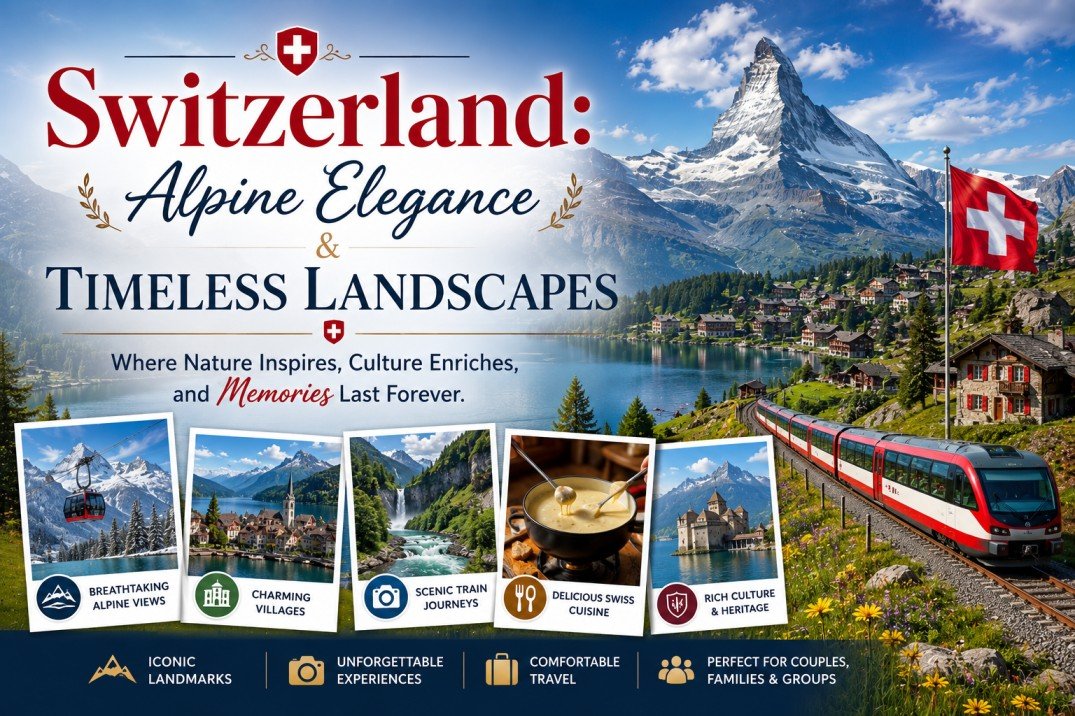
Imagine standing beneath snow-capped peaks so sharp they seem to pierce the sky, with emerald valleys stretching endlessly below. This is Switzerland: Alpine Elegance & Timeless Landscapes a destination where nature’s grandeur meets refined tranquility. From the mirror-like surfaces of alpine lakes to the charming chalets dotting sunlit meadows, Switzerland offers an unparalleled fusion of natural beauty and cultural sophistication. Whether you’re drawn to the romance of the Alps or the serenity of untouched wilderness, this country delivers an experience that feels both majestic and deeply personal.
Switzerland isn’t just a country it’s a living postcard. Its reputation for pristine landscapes, meticulous preservation, and timeless charm makes it a dream destination for travelers seeking authenticity and awe. The phrase “Alpine Elegance & Timeless Landscapes” captures not only the visual splendor of Switzerland but also the enduring spirit of a nation that honors its heritage while embracing modern comfort. From Zermatt’s car-free streets to the lavender fields of Lavaux, every corner tells a story of balance between nature and human ingenuity.
Why Switzerland Embodies Alpine Elegance
Switzerland’s identity is inseparable from its mountains. The Alps cover nearly two-thirds of the country, shaping not only its geography but also its culture, architecture, and way of life. This mountainous backbone gives rise to the very essence of alpine elegance clean lines, natural materials, and a deep respect for the environment.
The term “alpine elegance” goes beyond aesthetics. It reflects a lifestyle rooted in simplicity, precision, and harmony with nature. Swiss chalets, with their sloping roofs and wooden balconies, are designed to withstand harsh winters while blending seamlessly into the landscape. These structures, often adorned with flower boxes bursting with geraniums, exemplify the Swiss commitment to beauty and function.
- Architectural harmony: Buildings are constructed to complement the terrain, not dominate it.
- Use of local materials: Timber, stone, and slate are favored for sustainability and authenticity.
- Minimalist design: Interiors emphasize space, light, and natural textures.
This architectural philosophy extends to luxury resorts and boutique hotels, where guests are immersed in environments that feel both opulent and grounded. Think heated stone floors, panoramic windows framing mountain vistas, and spa treatments using alpine herbs. It’s luxury with a conscience elegance without excess.
Timeless Landscapes That Define a Nation
When we speak of “timeless landscapes,” Switzerland immediately comes to mind. These are places that have remained largely unchanged for centuries, preserved through careful stewardship and a national ethos of conservation. From glacial lakes to high-altitude meadows, the country’s scenery feels almost mythical in its perfection.
Consider Lake Geneva, where the water shimmers like liquid sapphire against the backdrop of Mont Blanc. Or the Lauterbrunnen Valley, a U-shaped glacial trough with 72 waterfalls cascading down limestone cliffs. These aren’t just beautiful spots they’re living ecosystems protected by Swiss law and international recognition. UNESCO World Heritage sites like the Swiss Alps Jungfrau-Aletsch region highlight the country’s dedication to preserving its natural treasures.
What makes these landscapes “timeless” is not just their age, but their resilience. Despite climate change and tourism pressures, Switzerland maintains strict environmental policies. National parks restrict development, hiking trails are meticulously marked, and wildlife corridors ensure animals can roam freely. This balance allows visitors to experience the Alps much as they were centuries ago wild, serene, and profoundly moving.
The Four Seasons of Alpine Beauty
Switzerland’s landscapes transform with the seasons, each offering a unique expression of alpine elegance.
- Spring: Snowmelt feeds wildflower meadows. Edelweiss and alpine roses bloom in high pastures, and villages come alive with festivals.
- Summer: Hiking trails open across the Alps. Lakes warm enough for swimming, and mountain huts serve hearty meals with panoramic views.
- Autumn: Forests blaze with color. Vineyards in Ticino and Valais turn golden, and the air carries the crisp scent of pine and apple.
- Winter: The Alps become a snowy wonderland. Ski resorts like St. Moritz and Verbier offer world-class slopes, while frozen lakes become natural ice rinks.
Each season enhances the sense of timelessness. Whether you’re skiing under a full moon or sipping wine on a sun-drenched terrace in October, the landscape remains a constant source of inspiration.
Cultural Refinement Meets Natural Grandeur
Switzerland’s elegance isn’t limited to its scenery it extends into its culture, cuisine, and daily rhythms. The Swiss have mastered the art of living well, blending precision with pleasure. This cultural refinement is evident in everything from their chocolate-making traditions to their public transportation system, often hailed as the most punctual in the world.
Food is a cornerstone of alpine elegance. Think of a fondue dinner in a wooden chalet, with melted Gruyère and Vacherin served in a traditional caquelon. Or a slice of Bündner Nusstorte, a rich nut tart from the Engadin valley. These dishes are more than meals they’re rituals that connect people to place and season.
Wine, too, plays a vital role. The terraced vineyards of Lavaux, overlooking Lake Geneva, produce crisp Chasselas wines that pair perfectly with local fish. In Ticino, the sun-drenched slopes yield robust Merlot, a testament to the region’s Mediterranean influence. Tasting wine here isn’t just about flavor it’s about experiencing the landscape in a glass.
Even the pace of life reflects elegance. The Swiss value quality over quantity, whether in craftsmanship, conversation, or time spent in nature. This mindful approach creates an atmosphere of calm and clarity something increasingly rare in today’s fast-paced world.
Iconic Destinations That Capture the Essence
While Switzerland is full of hidden gems, certain destinations epitomize the country’s alpine elegance and timeless landscapes. These are the places that define the Swiss experience for travelers and locals alike.
Zermatt: The Jewel Beneath the Matterhorn
Perched at the foot of the iconic Matterhorn, Zermatt is a car-free village where electric taxis glide silently past centuries-old chalets. The air is crisp, the views are unobstructed, and the sense of reverence for the mountain is palpable. Whether you’re skiing in winter or hiking in summer, Zermatt offers a front-row seat to one of the world’s most photographed peaks.
Interlaken: Between Two Lakes
Nestled between Lake Thun and Lake Brienz, Interlaken is a gateway to the Jungfrau region. Its location makes it ideal for adventure seekers and nature lovers alike. Paragliding over turquoise waters, cruising on historic paddle steamers, or taking the Jungfrau Railway to the “Top of Europe” Interlaken blends accessibility with awe-inspiring scenery.
Grindelwald: Alpine Village with a View
Known for its dramatic Eiger North Face, Grindelwald is a hiker’s paradise. Trails lead through flower-filled meadows and past glacial streams, offering views that seem painted rather than real. The village itself retains its traditional charm, with wooden houses and flower-decked balconies.
Lugano: Mediterranean Flair in the Alps
In contrast to the northern Alps, Lugano in the Italian-speaking canton of Ticino offers a sunnier, more relaxed vibe. Palm trees line the lakeshore, and the architecture reflects Italian influence. Yet even here, the surrounding mountains remind you that you’re still in Switzerland where elegance knows no borders.
Sustainable Tourism: Preserving Timeless Beauty
As one of the world’s most visited countries, Switzerland faces the challenge of balancing tourism with preservation. The answer lies in sustainable practices that honor both visitors and the environment. The Swiss take this responsibility seriously, implementing policies that ensure their landscapes remain timeless for generations.
Public transportation is a cornerstone of sustainable travel. The Swiss Travel System connects cities, villages, and mountain peaks with trains, buses, and boats that are clean, efficient, and scenic. The Glacier Express, for example, winds through 91 tunnels and over 291 bridges, offering a slow, immersive journey through the heart of the Alps.
Eco-certified accommodations are increasingly common. Hotels like the Whitepod in Les Marécottes use geodesic domes to minimize environmental impact while maximizing views. Others, such as the Bürgenstock Resort, have achieved carbon neutrality through renewable energy and waste reduction programs.
Tourists are also encouraged to travel responsibly. The “Swisstainable” program rates destinations and businesses on their sustainability efforts, helping travelers make informed choices. Simple actions like staying on marked trails, carrying reusable water bottles, and respecting wildlife go a long way in preserving the country’s natural integrity.
Experiencing Alpine Elegance Beyond the Scenery
True alpine elegance isn’t just seen it’s felt. It’s in the warmth of a handshake from a local farmer, the quiet hum of a cable car ascending a mountain, or the taste of fresh goat cheese at a mountain hut. These moments, often unplanned, define the Swiss experience.
Consider a morning spent at a traditional alpine pasture. You’ll hear the clang of cowbells, smell the scent of hay and pine, and watch as farmers in lederhosen and dirndls tend to their herds. This is not a staged performance it’s daily life, preserved with pride.
Or imagine attending a folk festival in Appenzell, where dancers in embroidered costumes perform the “Schuhplattler” to the rhythm of an alphorn. These traditions, passed down through generations, are a living expression of Swiss identity.
Even modern art finds a place in this timeless landscape. The Fondation Beyeler in Basel and the Kunstmuseum in Zurich showcase world-class collections, while outdoor installations like the “Skulptur Projekte” in Münster blend art with nature.
In Switzerland, elegance is not about luxury for its own sake. It’s about authenticity, craftsmanship, and a deep connection to the land. It’s the kind of beauty that doesn’t fade because it’s rooted in something real.
Key Takeaways
- Switzerland’s alpine elegance is defined by harmonious architecture, sustainable living, and a deep respect for nature.
- The country’s timeless landscapes from glacial lakes to high meadows are preserved through strict environmental policies and cultural stewardship.
- Seasonal changes enhance the beauty of the Alps, offering unique experiences in spring, summer, autumn, and winter.
- Cultural refinement is evident in Swiss cuisine, wine, festivals, and daily life, creating a balanced and mindful way of living.
- Iconic destinations like Zermatt, Interlaken, and Grindelwald exemplify the fusion of natural grandeur and human ingenuity.
- Sustainable tourism practices ensure that Switzerland’s landscapes remain pristine for future generations.
FAQ
What makes Switzerland’s landscapes “timeless”?
Switzerland’s landscapes are considered timeless due to their long-standing preservation, minimal human impact, and cultural reverence for nature. National parks, UNESCO sites, and strict environmental laws help maintain these areas in near-original condition, allowing visitors to experience the Alps much as they were centuries ago.
How does Switzerland balance tourism with environmental protection?
Switzerland promotes sustainable tourism through efficient public transportation, eco-certified accommodations, and programs like “Swisstainable” that rate destinations on environmental practices. Travelers are encouraged to use trains, stay on marked trails, and support local, low-impact businesses.
What is “alpine elegance” and how is it reflected in Swiss culture?
Alpine elegance refers to a lifestyle and aesthetic that values simplicity, craftsmanship, and harmony with nature. It’s seen in traditional chalet architecture, mindful living, high-quality cuisine, and a deep appreciation for the environment. This elegance is not about opulence, but about authenticity and balance.

