

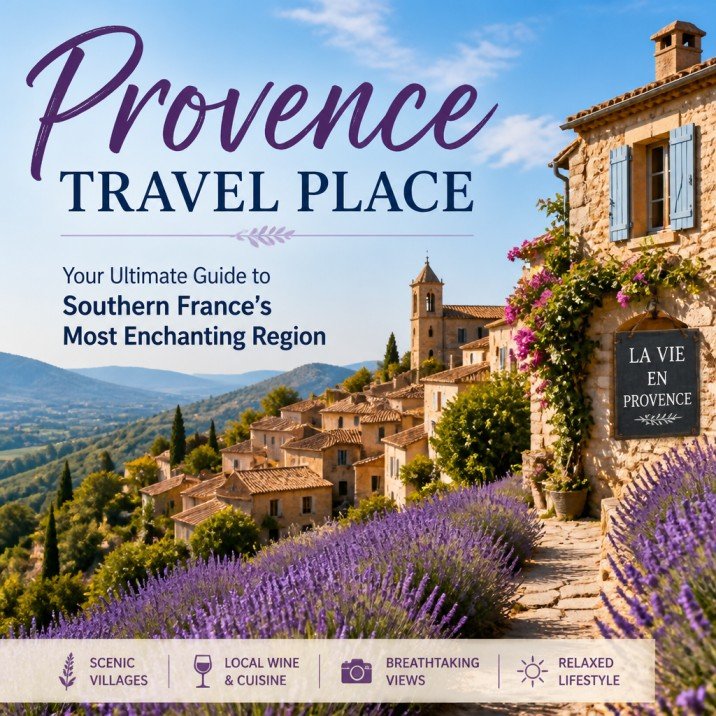
Dreaming of sun-drenched lavender fields, charming hilltop villages, and the scent of wild herbs carried on a warm Mediterranean breeze? The Provence travel place is exactly where your next unforgettable journey begins. Nestled in the heart of southeastern France, Provence isn’t just a destination it’s a sensory experience. From the cobbled streets of Avignon to the rolling vineyards of Châteauneuf-du-Pape, this region offers an authentic slice of French countryside life that captivates travelers year after year.
Whether you’re a first-time visitor or returning for another taste of its timeless charm, Provence delivers a perfect blend of natural beauty, rich history, and culinary excellence. With its mild climate, artistic legacy, and slow-paced lifestyle, it’s no wonder this region has inspired painters like Van Gogh and writers like Peter Mayle. In this comprehensive guide, we’ll explore the very best of Provence, helping you plan a trip that’s as enriching as it is relaxing.
Why Provence Is the Perfect Travel Place for Culture and Nature Lovers
Provence stands out as one of France’s most beloved travel destinations for good reason. It’s a region where culture and nature coexist in perfect harmony. The landscape is dotted with ancient Roman ruins, medieval towns, and fields of lavender that bloom in brilliant purple waves every summer. The climate is Mediterranean sunny, dry, and mild making it ideal for outdoor exploration nearly year-round.
Art and history permeate every corner of Provence. The region was once a Roman province, and remnants of that era like the Pont du Gard aqueduct and the Arena of Nîmes still stand proudly today. At the same time, Provence has long been a muse for artists. Vincent van Gogh painted over 300 works during his time in Arles, capturing the golden light and vibrant colors that define the region.
For travelers seeking authenticity, Provence offers a refreshing escape from crowded tourist hubs. Here, life moves at a slower pace. Markets brim with fresh produce, local cheeses, and handcrafted goods. Villages like Gordes and Roussillon cling to hilltops, offering panoramic views and a sense of timelessness. Whether you’re wandering through a sunflower field or sipping rosé at a vineyard, Provence invites you to savor every moment.
Top Natural Attractions in Provence
- Valensole Plateau – Famous for endless lavender fields, especially stunning in June and July.
- Les Baux-de-Provence – A dramatic limestone village with ruins and views over the Alpilles mountains.
- Camargue Regional Natural Park – Home to wild white horses, pink flamingos, and vast salt flats.
- Verdon Gorge – Often called France’s Grand Canyon, perfect for hiking, kayaking, and photography.
- Luberon Regional Natural Park – Rolling hills, vineyards, and picturesque villages like Bonnieux and Lacoste.
Best Time to Visit Provence Travel Place
The ideal time to visit the Provence travel place depends on what you want to experience. Summer (June to August) is peak season, with warm weather and full bloom of lavender and sunflowers. This is also when festivals like the Avignon Theatre Festival and the Lavender Festival in Sault take place. However, it can get crowded and accommodations book up quickly.
Spring (April to May) offers mild temperatures, fewer crowds, and the landscape in full bloom. Wildflowers carpet the hills, and the scent of blooming orange trees fills the air. It’s an excellent time for hiking and exploring outdoor markets.
Autumn (September to October) brings harvest season. Vineyards are busy with grape picking, and the light takes on a golden hue that photographers adore. The weather remains pleasant, and many locals consider this the best time to visit.
Winter (November to March) is quiet and peaceful. While some attractions may have reduced hours, you’ll find lower prices and a more intimate experience. The Christmas markets in Aix-en-Provence and the truffle festivals in Richerenches add a special charm to the season.
Seasonal Highlights at a Glance
- Spring: Blooming orchards, mild weather, Easter celebrations.
- Summer: Lavender harvest, outdoor festivals, long sunny days.
- Autumn: Wine harvest, truffle markets, golden light.
- Winter: Quiet villages, festive markets, cozy wine tastings.
Must-Visit Towns and Villages in Provence
Provence is made up of countless charming towns and villages, each with its own character and charm. While it’s tempting to rush from one to the next, the true magic of the Provence travel place lies in slowing down and immersing yourself in local life.
Avignon: The Papal City
Avignon is best known for the Palais des Papes (Palace of the Popes), a massive Gothic fortress that once served as the residence of the Catholic popes in the 14th century. The city is also famous for the Pont d’Avignon, the bridge immortalized in the children’s song. Stroll along the ramparts, visit the weekly market at Place des Halles, and enjoy a glass of Côtes du Rhône wine at a sidewalk café.
Aix-en-Provence: Elegant and Artistic
Founded by the Romans, Aix-en-Provence blends historic charm with a vibrant cultural scene. The Cours Mirabeau is a tree-lined avenue perfect for people-watching and sipping coffee. Don’t miss the Atelier Cézanne, the studio of Paul Cézanne, one of Provence’s most famous artists. The city’s markets, especially the flower and food markets, are a delight for the senses.
Arles: Van Gogh’s Inspiration
Arles is where Vincent van Gogh created some of his most iconic works, including “The Yellow House” and “Starry Night Over the Rhône.” The town retains much of its Roman heritage, with a well-preserved amphitheater still used for bullfights and concerts. The weekly market on Place du Forum is a must-visit, offering everything from olives to handmade soaps.
Gordes: The Jewel of the Luberon
Perched high in the Luberon mountains, Gordes is one of the most photographed villages in France. Its stone buildings cascade down the hillside, and the view from the Château de Gordes is breathtaking. Visit the nearby Sénanque Abbey, surrounded by lavender fields, for a truly magical experience.
Saint-Rémy-de-Provence: Artistic and Tranquil
This peaceful town was another of Van Gogh’s inspirations. The Saint-Paul de Mausole asylum, where he stayed, is now a museum. The town is surrounded by olive groves and almond trees, and its weekly market is one of the region’s finest. It’s also a great base for exploring the Alpilles.
Culinary Delights of Provence
No visit to the Provence travel place is complete without indulging in its world-renowned cuisine. Rooted in fresh, seasonal ingredients, Provençal food is simple yet deeply flavorful. Olive oil, garlic, tomatoes, herbs de Provence, and seafood are staples of the local diet.
Start your day with a pain au chocolat and a café crème at a corner boulangerie. For lunch, try a pan bagnat, a Niçois sandwich filled with tuna, olives, and hard-boiled eggs. Dinner might feature ratatouille, bouillabaisse (a fish stew from Marseille), or daube provençale, a slow-cooked beef stew.
Don’t forget the wine. Provence is France’s largest rosé-producing region, and its crisp, dry rosés are perfect for warm afternoons. Visit a local vineyard in the Côtes de Provence or Bandol regions for a tasting and tour.
Must-Try Provençal Dishes
- Bouillabaisse – Traditional fish stew from Marseille.
- Socca – A chickpea pancake from Nice, best eaten hot off the griddle.
- Tapenade – A spread made from olives, capers, and anchovies.
- Fougasse – A flatbread often flavored with herbs or cheese.
- Tarte Tropézienne – A sweet brioche filled with cream, from Saint-Tropez.
Outdoor Activities and Experiences
Provence is a paradise for outdoor enthusiasts. Whether you love hiking, cycling, or simply soaking in the scenery, there’s something for everyone.
Hiking trails crisscross the region, from the gentle paths of the Luberon to the challenging climbs of the Mont Ventoux, known as the “Giant of Provence.” The GR6 and GR9 long-distance trails pass through some of the most scenic areas.
Cycling is another popular way to explore. The Via Rhôna route follows the Rhône River from Lyon to the Mediterranean, passing through Avignon and Arles. Many towns offer bike rentals, and quiet country roads make for peaceful rides.
For a unique experience, take a hot air balloon ride over the lavender fields at sunrise. Several operators offer flights during the summer months, providing unforgettable views of the patchwork landscape below.
Water lovers can explore the Camargue by kayak or paddleboard, or take a boat tour through the Étang de Thau, known for its oyster farms. The Mediterranean coast offers beautiful beaches, especially around Saint-Tropez and Cassis.
Cultural and Artistic Highlights
Provence’s artistic legacy is one of its greatest draws. Beyond Van Gogh and Cézanne, the region has inspired countless painters, writers, and musicians. The light and colors of Provence are unlike anywhere else, and that’s what makes it a haven for creatives.
Visit the Fondation Vincent van Gogh in Arles, which hosts rotating exhibitions and promotes contemporary art inspired by the master. In Aix, the Musée Granet showcases works by Cézanne and other modern artists.
Music and theater thrive in Provence. The Chorégies d’Orange is a summer opera festival held in a Roman theater, while the Festival d’Aix-en-Provence focuses on classical music and opera. Even small villages often host summer concerts and art exhibitions.
Literature lovers will appreciate the Provence of Peter Mayle, whose book A Year in Provence brought international attention to the region. Many bookshops and cafés in villages like Lourmarin celebrate his legacy.
Practical Tips for Traveling in Provence
To make the most of your trip to the Provence travel place, a little planning goes a long way. Here are some essential tips:
- Transportation: Renting a car is the best way to explore Provence. Public transport is limited in rural areas, and many attractions are spread out.
- Language: While many locals speak English, learning a few French phrases will enhance your experience. “Bonjour,” “merci,” and “l’addition, s’il vous plaît” go a long way.
- Accommodation: Stay in a chambre d’hôte (bed and breakfast) or a gîte (vacation rental) for an authentic experience. Many are located in restored farmhouses or historic buildings.
- Markets: Visit local markets for fresh produce, cheese, and souvenirs. Most towns have a weekly market, often on Wednesday or Saturday mornings.
- Reservations: Book restaurants and popular attractions in advance, especially during peak season.
Key Takeaways
- Provence is a top-tier travel destination known for its lavender fields, hilltop villages, and rich cultural heritage.
- The best time to visit depends on your interests: summer for festivals and lavender, spring and autumn for mild weather and fewer crowds.
- Must-visit towns include Avignon, Aix-en-Provence, Arles, Gordes, and Saint-Rémy-de-Provence.
- Provençal cuisine features fresh, seasonal ingredients, with specialties like bouillabaisse, ratatouille, and rosé wine.
- Outdoor activities include hiking, cycling, hot air ballooning, and exploring the Camargue wetlands.
- Art and history are central to the Provence experience, with ties to Van Gogh, Cézanne, and Roman heritage.
- Travelers should rent a car, learn basic French, and book accommodations and dining in advance.
FAQ
What is the best way to get around Provence?
The most convenient way to explore Provence is by renting a car. Public transportation is limited in rural areas, and many of the most beautiful villages and natural sites are not easily accessible by train or bus. Having a car allows you to travel at your own pace and discover hidden gems off the beaten path.
Is Provence expensive to visit?
Provence can be moderately expensive, especially during peak season. Accommodation, dining, and activities in popular towns like Saint-Tropez or Gordes tend to be pricier. However, you can enjoy the region on a budget by staying in smaller villages, eating at local markets, and taking advantage of free attractions like hiking trails and village walks.
Do I need to speak French to travel in Provence?
While many people in tourist areas speak English, knowing basic French phrases will greatly enhance your experience. Locals appreciate the effort, and it can make interactions at markets, restaurants, and smaller towns more enjoyable. Simple greetings and polite expressions go a long way in building rapport.

