

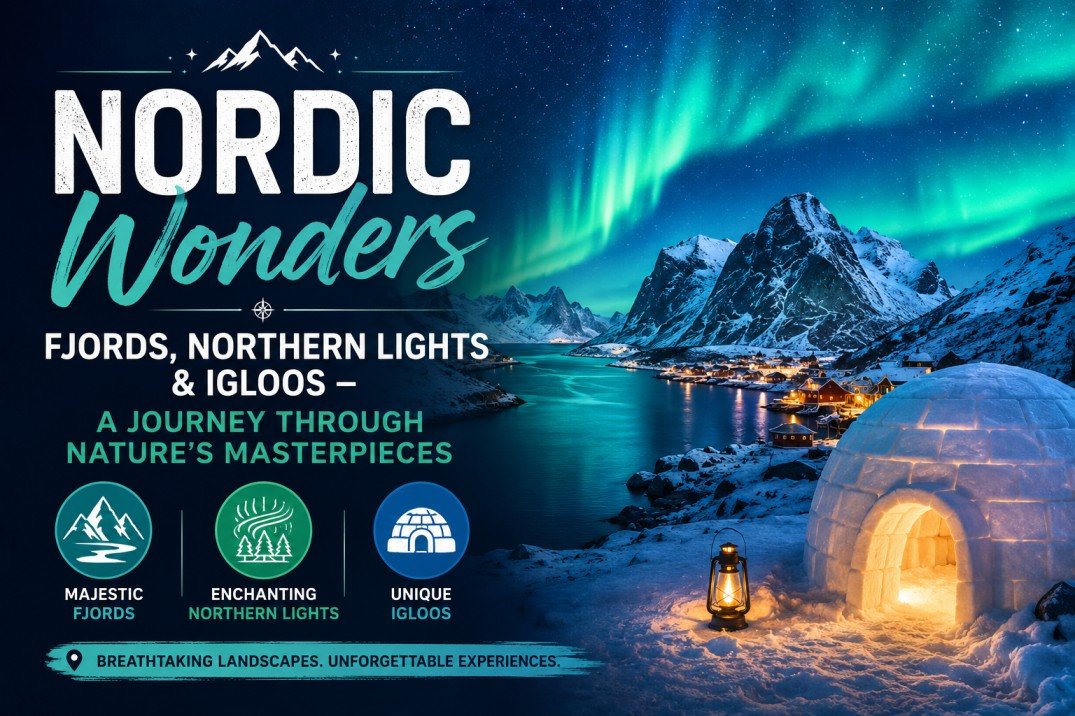
Imagine standing on the edge of a deep, mirror-still fjord, surrounded by towering cliffs and cascading waterfalls, as the crisp Arctic air fills your lungs. Above, the sky erupts in a dance of emerald and violet the Northern Lights shimmering like celestial silk. Nearby, a cozy igloo glows softly under the polar night, offering warmth and wonder in equal measure. This is the magic of Nordic Wonders: Fjords, Northern Lights & Igloos a trio of natural and architectural marvels that define the soul of Scandinavia and the Arctic North.
Whether you’re drawn to the dramatic landscapes of Norway’s fjords, the ethereal glow of the aurora borealis, or the charm of a snow-built igloo under a starlit sky, the Nordic region delivers an unparalleled travel experience. These three elements fjords, Northern Lights, and igloos are not just tourist attractions; they are symbols of resilience, beauty, and harmony with nature. In this guide, we’ll explore each wonder in depth, revealing where to see them, when to visit, and how to make the most of your journey through one of Earth’s most enchanting corners.
Why Nordic Wonders Captivate the World
The allure of Nordic Wonders lies in their raw, untouched beauty and the sense of timelessness they evoke. Fjords, carved by ancient glaciers, slice through Norway and Iceland like liquid canyons. The Northern Lights, a natural light show caused by solar particles colliding with Earth’s atmosphere, transform the winter sky into a living canvas. And igloos, traditionally built by the Inuit and still used today in Arctic tourism, represent human ingenuity in harmony with extreme environments.
These phenomena are not isolated they are interconnected parts of a greater Nordic identity. The same cold, clear skies that allow the aurora to shine also preserve the snow needed for igloo construction. The same rugged terrain that forms fjords also shelters remote villages where Northern Lights tours thrive. Together, they create a destination that feels both otherworldly and deeply rooted in Earth’s natural rhythms.
Exploring the Fjords: Norway’s Liquid Mountains
Fjords are among the most iconic natural features of the Nordic region, and Norway is their undisputed capital. These deep, narrow inlets were carved over millennia by glacial activity, leaving behind steep cliffs, cascading waterfalls, and serene waters that reflect the sky like glass. The most famous, such as the Sognefjord and Geirangerfjord, are UNESCO World Heritage sites and draw visitors from around the globe.
Top Fjords to Visit
- Sognefjord: Known as the “King of Fjords,” it’s the longest and deepest in Norway, stretching over 200 kilometers inland.
- Nærøyfjord: A narrow branch of the Sognefjord, famous for its dramatic scenery and inclusion in the UNESCO list.
- Hardangerfjord: Often called the “Fruit Belt of Norway,” it’s surrounded by orchards and blooming apple trees in spring.
- Lysefjord: Home to the famous Preikestolen (Pulpit Rock), a flat-topped cliff rising 604 meters above the water.
Best Ways to Experience the Fjords
There’s no single way to experience the fjords each offers a unique perspective. A cruise allows you to glide silently through the water, passing waterfalls and tiny villages. Hiking trails like those to Trolltunga or Kjeragbolten offer breathtaking views from above. For the adventurous, kayaking provides an intimate encounter with the fjord’s calm waters and hidden coves.
Season also plays a role. Summer (June to August) offers long days, mild weather, and access to hiking trails. Winter transforms the fjords into a snowy wonderland, with frozen waterfalls and fewer crowds. Either way, the fjords remain a centerpiece of any Nordic adventure.
The Northern Lights: Nature’s Nighttime Spectacle
The Northern Lights, or aurora borealis, are one of the most sought-after natural phenomena on Earth. Visible primarily in high-latitude regions, they occur when charged particles from the sun collide with gases in Earth’s atmosphere, creating shimmering curtains of green, pink, purple, and blue light.
In the Nordic countries especially Norway, Sweden, Finland, and Iceland the Northern Lights are not just a possibility; they’re a seasonal promise. The best viewing occurs between late September and early March, when the nights are long and dark, and the skies are clear.
Prime Locations for Aurora Viewing
- Tromsø, Norway: Known as the “Gateway to the Arctic,” Tromsø offers excellent infrastructure for aurora tours, including dog sledding and snowmobiling under the lights.
- Abisko, Sweden: Located in Swedish Lapland, Abisko National Park is famed for its “blue hole” a patch of sky that often remains clear even when surrounding areas are cloudy.
- Kakslauttanen, Finland: Home to the famous glass igloos, this resort lets you watch the Northern Lights from the comfort of your bed.
- Reykjavik and the Golden Circle, Iceland: While light pollution in the capital can be an issue, nearby areas like Thingvellir National Park offer dark skies and dramatic backdrops.
Tips for Seeing the Northern Lights
Success in spotting the aurora depends on several factors. First, check the aurora forecast (available via apps like My Aurora Forecast or websites like SpaceWeatherLive). Aim for nights with high KP index values (indicating strong solar activity). Avoid full moons and city lights, and dress warmly Arctic nights are unforgiving.
Joining a guided Northern Lights tour increases your chances, as local guides know the best spots and can chase clear skies. Many tours include photography tips, hot drinks, and cultural storytelling to enhance the experience.
Igloos: From Survival Shelters to Luxury Stays
While often associated with the Inuit of North America, igloos are also part of the Nordic Arctic experience especially in tourism. Modern igloos in Finland, Sweden, and Norway are not just snow huts; they are architectural marvels designed for comfort and wonder. From glass-roofed domes to full-service ice hotels, these structures offer a unique way to sleep under the stars or the aurora.
Types of Igloos in the Nordic Region
- Glass Igloos: Found in resorts like Kakslauttanen (Finland) and Sorrisniva (Norway), these feature transparent ceilings for unobstructed Northern Lights viewing.
- Snow Hotels: Entire hotels built from snow and ice, such as the Ice Hotel in Jukkasjärvi, Sweden, which is rebuilt each winter.
- Traditional Igloos: Built by guides during winter expeditions, these are temporary shelters used in survival courses or dog-sledding tours.
- Glamping Igloos: Luxury versions with heated floors, beds, and private bathrooms, blending adventure with comfort.
What It’s Like to Stay in an Igloo
Staying in an igloo is as much about atmosphere as it is about accommodation. Temperatures inside can range from -5°C to -10°C (23°F to 14°F), but high-quality sleeping bags and thermal mats keep guests warm. The experience is quiet, intimate, and deeply connected to nature. Falling asleep under a sky alive with the Northern Lights is a memory that lasts a lifetime.
Many igloo resorts also offer additional activities reindeer sleigh rides, sauna sessions under the stars, or traditional Sami storytelling. It’s not just a place to sleep; it’s a cultural and sensory journey.
Combining Fjords, Northern Lights & Igloos: The Ultimate Nordic Itinerary
For travelers seeking the full spectrum of Nordic Wonders, a well-planned itinerary can include all three elements. Start in Norway, where you can cruise the fjords in summer or hike them in winter. Then, travel north to Tromsø or Alta for Northern Lights hunting. Finally, end your journey in Finnish Lapland, where a night in a glass igloo completes the trifecta.
Sample 10-Day Itinerary
- Days 1–3: Bergen, Norway – Explore the city, then take a fjord cruise to Flam and Nærøyfjord.
- Days 4–5: Oslo to Tromsø – Fly north and join a Northern Lights tour, including a visit to a Sami camp.
- Days 6–7: Alta or Kirkenes – Experience dog sledding and snowmobiling under the aurora.
- Days 8–10: Rovaniemi or Saariselkä, Finland – Stay in a glass igloo, visit Santa Claus Village, and enjoy a Finnish sauna.
This journey blends natural beauty, cultural depth, and adventure offering a true immersion into the Nordic way of life.
When to Visit: Timing Your Nordic Adventure
The best time to experience Nordic Wonders depends on what you want to see. For fjords, summer (June to August) offers the most accessibility and mild weather. However, winter (December to February) provides a magical, snow-covered landscape and fewer tourists.
For the Northern Lights, the ideal window is from late September to early March, with peak activity around the equinoxes (September and March). Clear, dark skies are essential, so avoid periods of heavy cloud cover or full moons.
Igloos are typically available from December to April, depending on snow conditions. Glass igloos operate year-round, but the aurora season is the most popular time to book.
Ultimately, the Nordic region rewards flexibility. A shoulder-season trip (late September or early April) can offer a balance of good weather, fewer crowds, and strong chances of seeing the Northern Lights.
Cultural and Environmental Considerations
Traveling in the Nordic region comes with a responsibility to respect both culture and nature. The Sami people, indigenous to northern Scandinavia, have lived in harmony with the Arctic environment for centuries. When visiting Sami communities, be mindful of local customs, support ethical tourism, and avoid disrupting reindeer herding or sacred sites.
Environmental sustainability is also a core value in Nordic countries. Many tour operators follow strict eco-guidelines, such as minimizing waste, using electric vehicles, and educating guests about climate change. As a traveler, you can contribute by choosing responsible tours, packing reusable items, and leaving no trace.
Key Takeaways
- Nordic Wonders fjords, Northern Lights, and igloos are interconnected natural and cultural treasures that define the Arctic experience.
- Norway’s fjords offer dramatic landscapes best explored by cruise, hike, or kayak, with peak seasons in summer and winter.
- The Northern Lights are most visible from September to March in locations like Tromsø, Abisko, and Finnish Lapland, especially under clear, dark skies.
- Modern igloos range from traditional snow shelters to luxury glass domes, providing unique overnight experiences under the aurora.
- A well-planned itinerary can combine all three wonders, offering a comprehensive journey through Scandinavia’s natural and cultural highlights.
- Responsible travel ensures the preservation of these wonders for future generations, respecting both environment and indigenous cultures.
FAQ
Can you see the Northern Lights from an igloo?
Yes, especially if you stay in a glass igloo. These structures are designed with transparent ceilings to allow unobstructed views of the night sky, making them one of the best ways to watch the aurora borealis from the warmth of your bed.
Are fjords only found in Norway?
While Norway is home to the most famous fjords, similar formations exist in Iceland, Greenland, and even New Zealand. However, the term “fjord” is most commonly associated with Norway’s dramatic, glacier-carved inlets.
Is it safe to stay in an igloo in winter?
Yes, modern igloos especially glass or glamping versions are built for safety and comfort. They are insulated, equipped with proper sleeping gear, and often monitored by staff. Traditional snow igloos used in survival courses are also safe when built and maintained correctly by experienced guides.
Final Thoughts: Embracing the Magic of the North
The Nordic Wonders of fjords, Northern Lights, and igloos are more than travel destinations they are experiences that awaken the senses and stir the soul. They remind us of nature’s power, beauty, and fragility. Whether you’re standing on the edge of a fjord, gazing up at the aurora, or drifting off to sleep in a snow-built dome, you’re not just visiting a place. You’re becoming part of a story one written in ice, light, and silence.
So pack your warmest clothes, charge your camera, and prepare for a journey that will leave you breathless. The North is waiting.

