

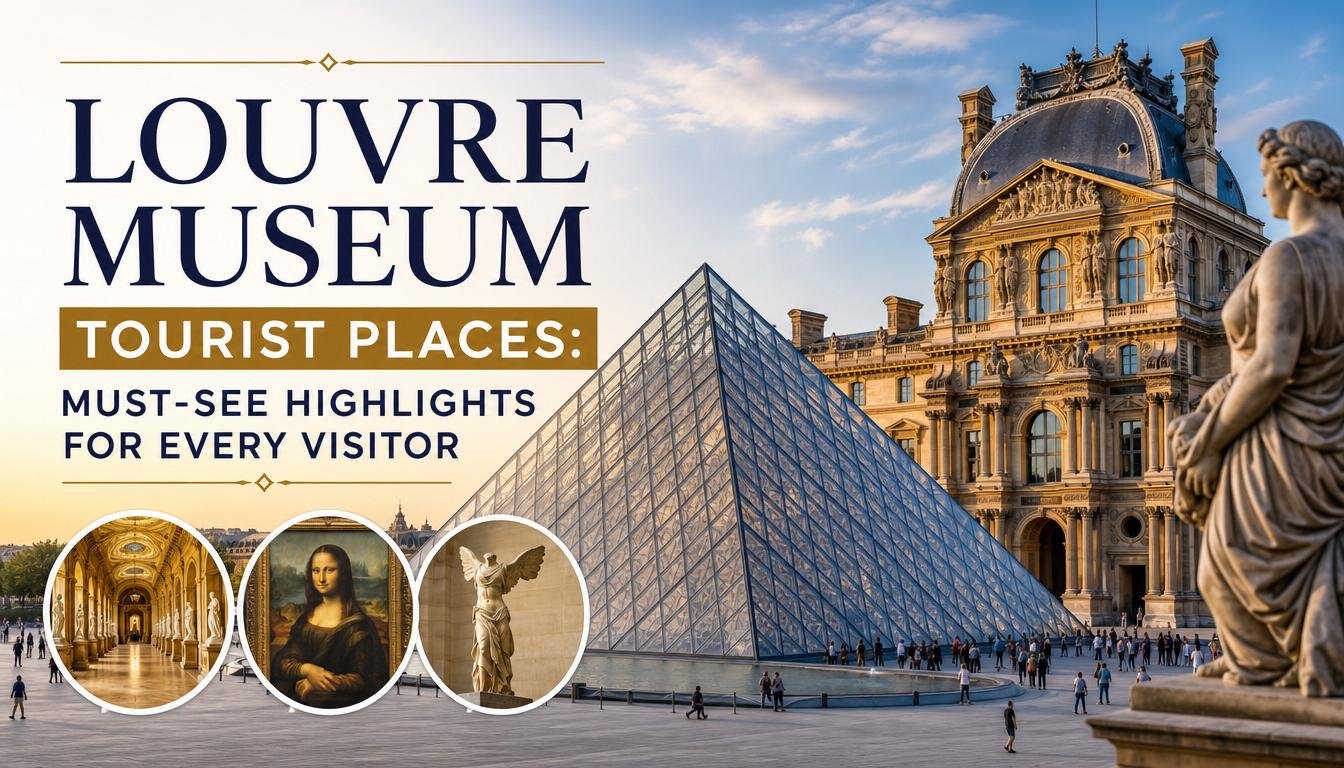
When you step into the Louvre Museum tourist places, you’re not just visiting an art gallery—you’re entering a world where centuries of human creativity, history, and culture converge under one iconic glass pyramid. As the most visited museum in the world, the Louvre in Paris houses over 38,000 objects spanning from ancient civilizations to the 19th century. But with so much to see, where should you start? This guide cuts through the overwhelm and zeroes in on the top Louvre Museum tourist places you absolutely cannot miss—whether it’s your first visit or your fifth.
From the enigmatic smile of the Mona Lisa to the grandeur of Napoleon’s coronation, the Louvre offers a curated journey through art, power, and beauty. This article is your insider’s map to the most captivating Louvre Museum tourist places, designed to help you maximize your time, avoid the crowds, and experience the museum like a true connoisseur.
Why the Louvre Is a Must-Visit Destination
The Louvre isn’t just a museum—it’s a cultural landmark that has shaped the global perception of art and heritage. Originally built as a fortress in the late 12th century, it transformed into a royal palace and eventually opened as a public museum in 1793. Today, it stands as a symbol of France’s artistic legacy and a beacon for travelers worldwide.
Every year, over 9 million visitors flock to the Louvre, drawn by its unparalleled collection and architectural grandeur. But beyond the numbers, what makes the Louvre so special is its ability to transport you across time and space. One moment you’re admiring Egyptian sarcophagi, the next you’re standing before a Roman statue or a Renaissance masterpiece.
For tourists, the Louvre offers more than just art—it offers stories. Stories of kings and queens, of revolutions and restorations, of artists who changed the world. And within its vast halls, certain Louvre Museum tourist places stand out as essential stops on any itinerary.
Top Louvre Museum Tourist Places You Can’t Miss
1. The Mona Lisa – Salle des États
No visit to the Louvre is complete without seeing Leonardo da Vinci’s Mona Lisa. Housed in the Salle des États, this small yet iconic portrait draws massive crowds—but for good reason. Painted between 1503 and 1519, the painting’s enigmatic expression, masterful use of sfumato, and mysterious background have fascinated art lovers for centuries.
To avoid the worst of the crowd, arrive early or visit during the museum’s late-night openings. The painting is displayed behind bulletproof glass and under controlled lighting to preserve its delicate condition. While the size may surprise you (it’s only 77 cm × 53 cm), its cultural impact is immeasurable.
- Location: Denon Wing, 1st floor, Salle des États
- Tip: Visit between 9:00–10:00 AM or after 5:00 PM for fewer people
- Fun Fact: The Mona Lisa was stolen in 1911 and recovered two years later, making international headlines
2. Venus de Milo – Greek Antiquities
One of the most famous sculptures in the world, the Venus de Milo is a Hellenistic masterpiece believed to depict the goddess Aphrodite. Discovered on the Greek island of Milos in 1820, the statue dates back to around 100 BCE and stands over 2 meters tall.
Located in the Sully Wing, the sculpture’s graceful pose and missing arms have sparked endless speculation. Was she holding an apple? A shield? Or simply resting her hand on her hip? Whatever the truth, her serene expression and flowing drapery continue to captivate visitors.
- Location: Sully Wing, ground floor, Room 346
- Tip: Combine your visit with other Greek antiquities nearby, including the Winged Victory of Samothrace
- Fun Fact: The statue was gifted to King Louis XVIII, who donated it to the Louvre
3. Winged Victory of Samothrace – Daru Staircase
Perched dramatically at the top of the Daru Staircase in the Denon Wing, the Winged Victory of Samothrace is a breathtaking sight. This 2nd-century BCE marble sculpture commemorates a naval victory and is celebrated for its dynamic composition and sense of motion.
The statue’s missing head and arms only add to its mystique. The way the fabric clings to her body as if caught in a strong wind creates a powerful illusion of movement. It’s no wonder this piece is often called the “Mona Lisa of sculpture.”
- Location: Denon Wing, 1st floor, Daru Staircase
- Tip: Arrive early to photograph it without crowds blocking the view
- Fun Fact: The statue was reconstructed from over 200 fragments discovered on Samothrace
4. The Coronation of Napoleon – Salon Carré
Jacques-Louis David’s massive painting The Coronation of Napoleon dominates the Salon Carré in the Denon Wing. Measuring 6.21 meters by 9.79 meters, this neoclassical masterpiece depicts Napoleon crowning himself Emperor in 1804 at Notre-Dame Cathedral.
The level of detail is astonishing—every figure, from Josephine to Pope Pius VII, is meticulously rendered. David even included self-portraits and subtle political messages. It’s not just a painting; it’s a historical document and a work of propaganda all in one.
- Location: Denon Wing, 1st floor, Room 75
- Tip: Use the audio guide or a guided tour to fully appreciate the symbolism
- Fun Fact: David spent three years completing the painting and traveled to Rome to ensure accuracy
5. The Raft of the Medusa – Denon Wing
Theodore Géricault’s The Raft of the Medusa is a haunting depiction of human suffering and despair. Painted in 1818–1819, it portrays the aftermath of a French naval shipwreck and the survivors’ desperate struggle for survival.
The painting shocked audiences with its raw emotion and realistic portrayal of death and hope. Its dramatic lighting and composition influenced the Romantic movement and remain powerful to this day.
- Location: Denon Wing, 1st floor, Room 77
- Tip: Spend time observing the expressions—each face tells a story
- Fun Fact: Géricault interviewed survivors and studied corpses to achieve realism
6. Egyptian Antiquities – Sully and Richelieu Wings
The Louvre’s Egyptian collection is one of the largest in the world, with over 50,000 artifacts spanning 4,000 years of history. From mummies and sarcophagi to hieroglyphic tablets and statues of pharaohs, this section offers a deep dive into ancient civilization.
Don’t miss the colossal statue of Ramesses II, the tomb of Seti I, or the intricate jewelry from the tomb of Yuya and Thuya. The Sully Wing’s ground floor is particularly rich in treasures.
- Location: Sully and Richelieu Wings, multiple floors
- Tip: Use the museum map to navigate the vast collection efficiently
- Fun Fact: Napoleon’s campaign in Egypt (1798–1801) sparked European interest in Egyptology
7. The Louvre Pyramid – Cour Napoléon
While not inside the museum, the glass pyramid entrance is one of the most iconic Louvre Museum tourist places. Designed by architect I.M. Pei and completed in 1989, it serves as the main entrance and a striking contrast to the classical palace architecture.
The pyramid has become a symbol of modern Paris and a favorite photo spot for visitors. At night, it glows softly, creating a magical atmosphere. Beneath it lies the Carrousel du Louvre, a shopping and dining area that connects to the underground entrance.
- Location: Cour Napoléon, outside the museum
- Tip: Visit at sunset for the best lighting and fewer crowds
- Fun Fact: The pyramid is made of 603 rhombus-shaped and 70 triangular glass segments
Hidden Gems: Lesser-Known Louvre Museum Tourist Places
While the Mona Lisa and Venus de Milo steal the spotlight, the Louvre is full of hidden treasures that offer a more intimate experience. These Louvre Museum tourist places are perfect for travelers who want to escape the crowds and discover something unique.
The Galerie d’Apollon – Denon Wing
This opulent gallery was once the royal throne room and now houses the Louvre’s crown jewels. The ceiling, painted by Charles Le Brun, depicts Apollo, the sun god, in a celestial procession. The room’s gilded details and stained glass create a dazzling effect.
It’s a favorite among art historians but often overlooked by general tourists. Visit during off-peak hours to fully appreciate its grandeur.
The Medieval Louvre – Sully Wing
Few visitors realize that parts of the Louvre date back to the 12th century. The Medieval Louvre exhibit in the Sully Wing allows you to walk through the original fortress foundations, complete with moats and walls.
It’s a fascinating glimpse into the building’s origins and a great way to connect with Paris’s medieval past.
The Islamic Art Collection – Richelieu Wing
Opened in 2012, this stunning collection features over 3,000 objects from the 7th to the 19th century, including ceramics, textiles, and metalwork. The centerpiece is the 14th-century Baptistère de Saint Louis, a masterpiece of Mamluk art.
The gallery’s architecture, with its golden dome and reflective pools, is as impressive as the artifacts.
Tips for Visiting the Louvre Like a Pro
To make the most of your visit, follow these expert tips tailored for Louvre Museum tourist places:
- Buy tickets online: Skip the line by purchasing timed-entry tickets in advance
- Download the official app: It includes maps, audio guides, and real-time crowd updates
- Visit on Wednesday or Friday evenings: The museum stays open until 9:45 PM, and crowds are thinner
- Use the Carrousel du Louvre entrance: Less crowded than the pyramid, especially in the morning
- Wear comfortable shoes: The Louvre spans 72,735 square meters—prepare to walk
- Focus on one wing: Trying to see everything in one day is overwhelming. Pick Denon, Sully, or Richelieu
Key Takeaways
- The Louvre Museum tourist places include world-famous masterpieces like the Mona Lisa, Venus de Milo, and Winged Victory of Samothrace
- Hidden gems like the Galerie d’Apollon and Medieval Louvre offer quieter, equally rewarding experiences
- Plan your visit strategically—use online tickets, off-peak hours, and the museum app to avoid crowds
- The Louvre is more than art—it’s a journey through history, culture, and human creativity
- Even a half-day visit can be deeply enriching if you focus on key highlights
FAQ: Louvre Museum Tourist Places
What are the most famous Louvre Museum tourist places?
The most famous Louvre Museum tourist places include the Mona Lisa in the Salle des États, the Venus de Milo in the Sully Wing, the Winged Victory of Samothrace on the Daru Staircase, and The Coronation of Napoleon in the Salon Carré. These iconic works draw millions of visitors each year.
How much time do I need to see the best of the Louvre?
To see the top Louvre Museum tourist places, plan for at least 3–4 hours. If you want to explore deeper or visit multiple wings, a full day is ideal. Prioritize your must-see pieces and use the museum map to optimize your route.
Is the Louvre worth visiting if I’m not an art lover?
Absolutely. The Louvre offers more than just paintings and sculptures. Its historical architecture, Egyptian mummies, medieval foundations, and immersive storytelling make it fascinating for all types of travelers. Even casual visitors leave inspired by the scale and richness of human achievement on display.

