

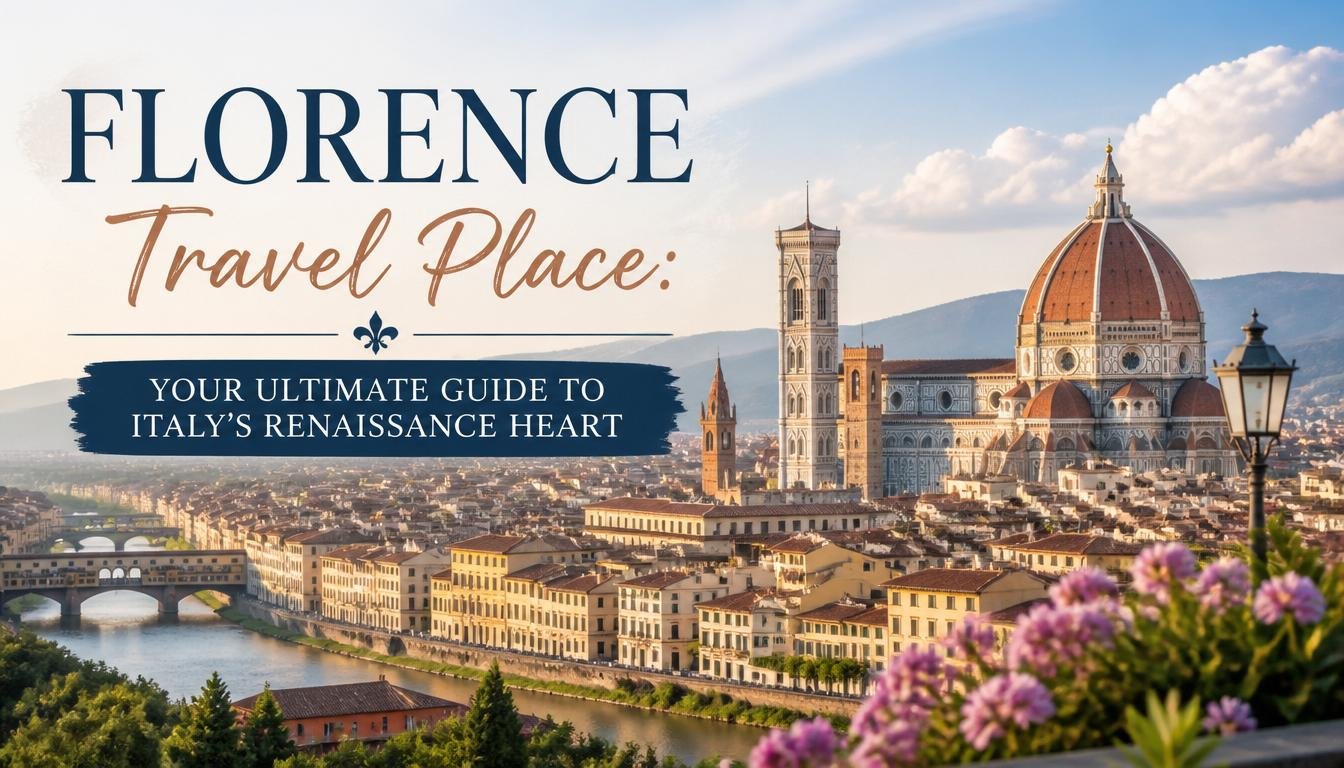
Dreaming of cobblestone streets, towering domes, and art that changed the world? Florence, the cradle of the Renaissance, is more than just a travel destination—it’s a living museum where every corner tells a story. As the capital of Italy’s Tuscany region, Florence offers an unmatched blend of history, culture, and culinary excellence. Whether you’re an art lover, a foodie, or a history buff, this city delivers an unforgettable experience. From the iconic Duomo to hidden piazzas filled with local charm, Florence travel place is a must-visit for anyone seeking beauty, depth, and authenticity in their European adventure.
Why Florence Should Be Your Next Travel Destination
Florence isn’t just another Italian city—it’s a cultural epicenter that shaped Western civilization. Home to masterpieces by Michelangelo, Botticelli, and Leonardo da Vinci, the city pulses with artistic energy. But beyond the galleries and monuments, Florence offers a lifestyle: slow mornings with espresso in hand, evening strolls along the Arno River, and conversations with locals in sun-drenched squares. It’s a place where history isn’t locked behind glass—it’s lived, breathed, and savored.
What sets Florence apart is its compact size. Unlike sprawling metropolises, Florence is walkable. In a single afternoon, you can climb the Duomo, admire Michelangelo’s David, and enjoy a gelato by the Ponte Vecchio. This accessibility makes it ideal for first-time visitors and seasoned travelers alike. Plus, its central location in Tuscany means day trips to Siena, Pisa, or the Chianti wine region are just a short train ride away.
- Art & Architecture: Over 60 museums and galleries, including the Uffizi and Accademia.
- Culinary Delights: Authentic Tuscan cuisine—ribollita, bistecca alla fiorentina, and world-class wines.
- Walkability: Compact historic center, perfect for exploring on foot.
- Local Vibe: A mix of students, artists, and lifelong residents keeps the city vibrant.
Top Attractions in Florence Travel Place
The Duomo: Florence’s Iconic Landmark
The Florence Cathedral, commonly known as the Duomo, dominates the city’s skyline with its striking red dome designed by Filippo Brunelleschi. Climbing the 463 steps to the top rewards you with panoramic views of Florence and the surrounding Tuscan hills. Inside, the frescoed interior by Giorgio Vasari and Federico Zuccari depicts the Last Judgment in stunning detail. Don’t miss the Baptistery’s bronze doors, often called the “Gates of Paradise” by Michelangelo.
Visiting the Duomo complex includes access to the dome, the cathedral, the baptistery, and Giotto’s Bell Tower. Book tickets in advance to avoid long lines, especially during peak season. Early morning or late afternoon visits offer softer light and fewer crowds—ideal for photography and reflection.
Uffizi Gallery: A Treasure Trove of Renaissance Art
The Uffizi Gallery is one of the world’s most important art museums, housing works by Botticelli, Michelangelo, Raphael, and Caravaggio. Its most famous piece, Botticelli’s The Birth of Venus, draws crowds from around the globe. The gallery’s layout follows a chronological journey through the Renaissance, making it easy to appreciate the evolution of artistic techniques and themes.
To make the most of your visit, consider a guided tour or audio guide. The museum can get crowded, so arriving early or booking a timed entry slot is essential. Don’t rush—spend time in the rooms dedicated to Florentine painters, where the city’s artistic soul truly shines.
Accademia Gallery: Home to Michelangelo’s David
No visit to Florence is complete without seeing Michelangelo’s David, the symbol of Renaissance humanism and artistic mastery. Located in the Accademia Gallery, the 17-foot marble statue captures David in a moment of quiet intensity before his battle with Goliath. The sculpture’s anatomical precision and emotional depth are breathtaking.
Beyond David, the gallery features other Michelangelo works, including the unfinished Prisoners series, which reveal the artist’s creative process. The museum is smaller than the Uffizi, so it’s easier to navigate. Still, book tickets online to skip the line and ensure entry.
Ponte Vecchio: The Heart of Florence
The Ponte Vecchio is Florence’s oldest bridge, spanning the Arno River with its distinctive row of jewelry shops. Originally home to butchers and tanners, the bridge was reserved for goldsmiths and jewelers by the 16th century—a tradition that continues today. Walking across at sunset, with the river glowing below, is a quintessential Florence moment.
The bridge also connects to the Vasari Corridor, a secret passageway built for the Medici family to move between the Palazzo Vecchio and Pitti Palace without mingling with the public. While the corridor is usually closed to tourists, its history adds a layer of intrigue to the bridge’s charm.
Pitti Palace and Boboli Gardens
Just across the Arno, the Pitti Palace was once the residence of the powerful Medici family. Today, it houses several museums, including the Palatine Gallery, which displays Renaissance paintings in opulent rooms. The real highlight, however, is the Boboli Gardens—a sprawling Italianate garden with fountains, grottoes, and sculptures.
Strolling through the Boboli Gardens feels like stepping into a Renaissance painting. The Amphitheater, the Fountain of Neptune, and the Grotta del Buontalenti are must-see spots. Visit in the late afternoon when the light is golden and the gardens are less crowded.
Hidden Gems in Florence Travel Place
While the major attractions draw millions, Florence’s true magic lies in its quieter corners. Escape the crowds and discover places where locals gather, artists sketch, and time seems to slow down.
San Miniato al Monte
Perched on a hill overlooking the city, San Miniato al Monte is a Romanesque church that offers one of the best views of Florence. The climb is worth it—especially at sunset, when the Duomo glows against the twilight sky. The church itself is serene, with intricate mosaic floors and a peaceful cemetery.
It’s less visited than the Duomo, making it a peaceful retreat. Combine your visit with a walk through the nearby Giardino delle Rose (Rose Garden), which features over 150 varieties of roses and more stunning city views.
Mercato Centrale: A Food Lover’s Paradise
The Mercato Centrale is Florence’s central market, a bustling hub of fresh produce, cheeses, meats, and spices. The ground floor is a feast for the senses—vendors call out, the air is rich with the scent of truffles and cured meats, and colorful displays tempt every palate.
Head upstairs to the food court, where you can sample Tuscan specialties like lampredotto (a traditional sandwich made from cow stomach), pappa al pomodoro (tomato and bread soup), and fresh pasta. It’s a great way to experience local cuisine without the tourist markup of restaurant menus.
Santa Croce Basilica
Known as the “Temple of the Italian Glories,” Santa Croce is the burial place of Michelangelo, Galileo, and Machiavelli. The basilica’s Gothic architecture and frescoed chapels are impressive, but its real draw is the sense of history that permeates the space.
The adjacent leather school offers workshops where you can learn traditional Florentine leatherworking. Even if you don’t take a class, browsing the stalls for handmade bags, wallets, and journals is a treat.
Best Time to Visit Florence Travel Place
Florence is beautiful year-round, but the best time to visit depends on your preferences. Spring (April to June) and fall (September to October) offer mild weather, fewer crowds, and blooming gardens. These seasons are ideal for walking tours, outdoor dining, and exploring the city without the summer heat.
Summer (July to August) is peak tourist season. While the city is lively, temperatures can soar above 90°F (32°C), and attractions are packed. If you visit in summer, start your days early and seek shade during the hottest hours.
Winter (November to March) is the quietest time, with lower prices and shorter lines. Though some outdoor sites may be chilly, indoor museums and cozy trattorias provide warmth and comfort. December brings festive lights and Christmas markets, adding a magical touch to the city.
- Spring: Ideal weather, festivals, and blooming landscapes.
- Summer: Long days, but hot and crowded.
- Fall: Comfortable temperatures and harvest season.
- Winter: Budget-friendly, peaceful, and atmospheric.
How to Get Around Florence
Florence’s historic center is compact and best explored on foot. Most major attractions are within a 20-minute walk of each other. Comfortable shoes are a must—cobblestones can be uneven, and you’ll do a lot of walking.
For longer distances, the city has an efficient public bus system operated by ATAF. Tickets can be purchased at tabaccherias (tobacco shops) or via the ATAF app. Validate your ticket upon boarding to avoid fines.
Biking is another great option. Florence has bike lanes and rental shops throughout the city. Electric bikes are especially helpful for tackling the city’s gentle hills. Just be mindful of traffic and pedestrian zones.
Taxis are available but expensive. Use them for late-night travel or when carrying heavy luggage. Ride-sharing apps like Uber are limited in Florence, so traditional taxis are your best bet.
Where to Stay in Florence Travel Place
Accommodation in Florence ranges from luxury hotels to budget hostels, with options for every traveler. The historic center (Centro Storico) is the most convenient location, placing you within walking distance of major sights. Neighborhoods like Santa Croce, San Lorenzo, and Santo Spirito offer a mix of charm and accessibility.
For a quieter stay, consider Oltrarno, the area south of the Arno. It’s less touristy, with artisan workshops, local cafes, and a bohemian vibe. The Pitti Palace and Boboli Gardens are nearby, making it ideal for culture lovers.
Luxury travelers might prefer hotels like the Four Seasons or Hotel Brunelleschi, which offer historic elegance and top-tier service. Budget travelers can find excellent hostels and B&Bs, especially in the student-heavy areas near the university.
Local Cuisine: A Taste of Tuscany
Florence is a food lover’s dream. Tuscan cuisine is simple, rustic, and deeply flavorful, relying on high-quality local ingredients. Start your day with a caffè and cornetto (similar to a croissant) at a neighborhood café. Italians typically drink coffee standing at the bar—sitting at a table incurs an extra charge.
For lunch, try ribollita, a hearty soup made with bread, beans, and vegetables, or pappa al pomodoro, a tomato and bread soup. Dinner is the main meal, often featuring bistecca alla fiorentina—a thick T-bone steak grilled over wood fire and seasoned with salt, pepper, and olive oil.
Don’t forget dessert. Cantucci (almond biscuits) dipped in vin santo (holy wine) is a classic. Gelato is also a must—look for natural colors and avoid overly bright, artificial-looking scoops.
Wine is integral to the Florentine experience. Order a glass of Chianti, Brunello di Montalcino, or Vernaccia di San Gimignano with your meal. Many restaurants offer wine by the glass or carafe, making it easy to sample local varieties.
Cultural Etiquette and Travel Tips
Florentines take pride in their city and appreciate respectful visitors. Dress modestly when visiting churches—cover shoulders and knees. Avoid loud conversations in quiet areas, and always greet shopkeepers with a polite “Buongiorno” (good morning) or “Buonasera” (good evening).
Tipping is not mandatory but appreciated. Rounding up the bill or leaving 5–10% in restaurants is common. In cafes, leave small change in the saucer.
Learn a few basic Italian phrases. Even simple greetings like “Grazie” (thank you) and “Per favore” (please) go a long way. Locals respond warmly to effort, and it enhances your travel experience.
Be cautious of pickpockets in crowded areas like the Duomo, Uffizi, and train station. Keep your belongings secure and avoid displaying expensive items.
Key Takeaways
- Florence is a compact, walkable city rich in art, history, and culture.
- Must-see attractions include the Duomo, Uffizi Gallery, Accademia, and Ponte Vecchio.
- Hidden gems like San Miniato al Monte and Mercato Centrale offer authentic experiences.
- Best visited in spring or fall for ideal weather and fewer crowds.
- Tuscan cuisine is simple, flavorful, and best enjoyed at local trattorias.
- Respect local customs, dress appropriately, and learn basic Italian phrases.
FAQ
What is the best way to see Florence in 3 days?
Focus on the historic center. Day one: Duomo, Uffizi, and Ponte Vecchio. Day two: Accademia, Santa Croce, and Mercato Centrale. Day three: Pitti Palace, Boboli Gardens, and a sunset at San Miniato al Monte. Use a city pass to save time and money.
Is Florence safe for solo travelers?
Yes, Florence is generally safe for solo travelers. Stick to well-lit, populated areas at night, avoid displaying valuables, and stay aware of your surroundings. Many hostels and tours cater to solo travelers, making it easy to meet others.
Can I visit Florence without speaking Italian?
Absolutely. Most tourist areas have English-speaking staff, and signage is often bilingual. Learning a few basic phrases enhances the experience, but it’s not necessary. Many locals appreciate the effort, even if your Italian is limited.
Florence travel place is more than a destination—it’s an immersion into a world where art, history, and life intertwine. Whether you’re marveling at a Renaissance masterpiece, sipping wine in a hidden courtyard, or simply watching the Arno flow beneath the Ponte Vecchio, Florence leaves an indelible mark on your soul. Plan your journey, embrace the pace, and let the city’s timeless beauty unfold before you.

