

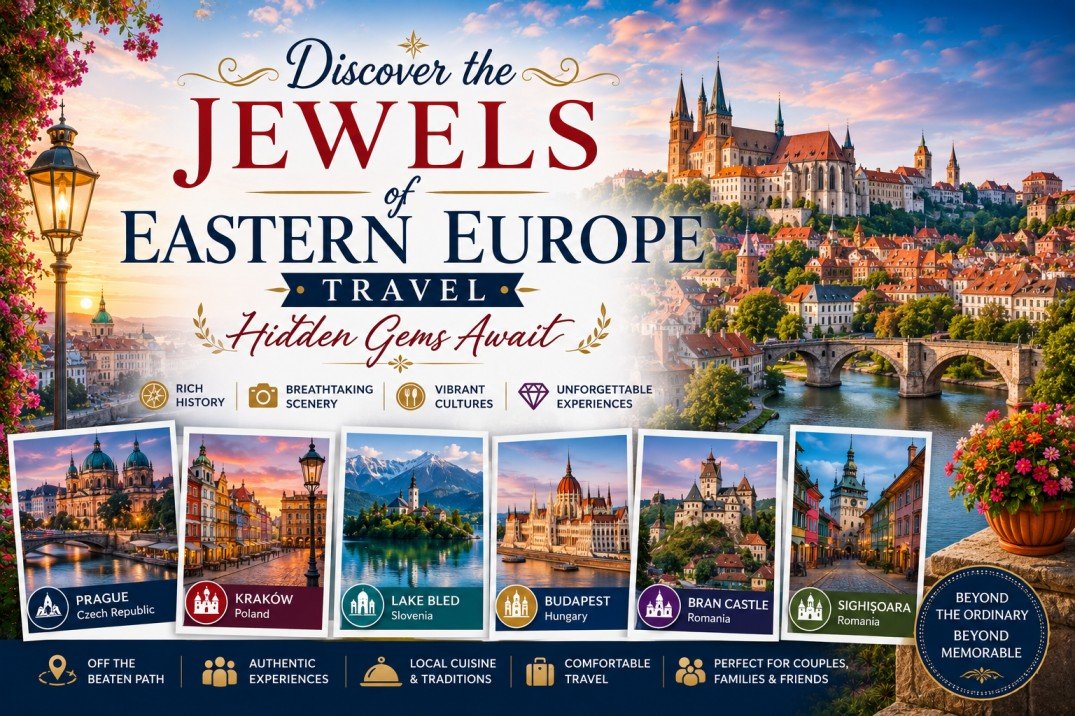
Eastern Europe is no longer just a footnote on the global travel map it’s now a shining destination brimming with culture, history, and natural beauty. The jewels of Eastern Europe travel offer an authentic, off-the-beaten-path experience that combines affordability with unforgettable charm. From medieval towns nestled in rolling hills to vibrant capitals pulsing with artistic energy, this region invites curious travelers to explore its rich tapestry of traditions, architecture, and landscapes.
Unlike the crowded streets of Western Europe, Eastern Europe retains a sense of discovery. Whether you’re wandering through cobbled alleys in Lviv, gazing at the Danube from a Budapest café, or hiking the Carpathian trails in Romania, every moment feels personal and profound. These destinations aren’t just scenic they’re deeply human, shaped by centuries of resilience, creativity, and cultural fusion.
For travelers seeking depth over dazzle, the jewels of Eastern Europe deliver. This article dives into the most captivating countries, cities, and experiences that define the region’s unique allure. We’ll explore must-visit destinations, seasonal insights, practical travel tips, and why this corner of the continent is redefining modern tourism.
Why Eastern Europe Is the Ultimate Travel Destination Right Now
Eastern Europe has quietly emerged as one of the most rewarding regions for discerning travelers. With lower costs, fewer crowds, and a wealth of UNESCO World Heritage sites, it offers exceptional value without sacrificing quality. The jewels of Eastern Europe travel are not just visually stunning they’re emotionally resonant.
Countries like Poland, Czech Republic, Hungary, Romania, and Bulgaria have invested heavily in tourism infrastructure while preserving their historical integrity. Train networks connect major cities efficiently, and English proficiency is increasingly common, especially in urban centers. This makes independent travel accessible even for first-time visitors.
Beyond practicality, the region’s cultural richness is unmatched. Eastern Europe is where East meets West where Orthodox domes stand beside Gothic spires, and folk music blends with jazz in underground clubs. It’s a place where history isn’t locked in museums but lives in daily life: in family recipes, village festivals, and the stories passed down through generations.
For those tired of cookie-cutter itineraries, Eastern Europe offers authenticity. Whether you’re sipping rakija in a Serbian mountain village or attending a classical concert in a 14th-century Transylvanian church, the experiences are deeply personal and often transformative.
Top Countries to Explore: The Crown Jewels of Eastern Europe
Poland: A Phoenix Rising from History
Poland is a powerhouse of culture, resilience, and natural beauty. From the haunting memorials of Auschwitz to the fairy-tale charm of Kraków’s Old Town, the country offers a profound journey through time. Warsaw, once nearly destroyed, has been meticulously rebuilt and now pulses with innovation and creativity.
Kraków remains the cultural heart of Poland. Its Main Market Square is Europe’s largest medieval town square, surrounded by Gothic churches, Renaissance townhouses, and lively cafés. Just a short trip away, the Wieliczka Salt Mine reveals underground chapels carved entirely from salt a true wonder of human ingenuity.
For nature lovers, the Tatra Mountains offer world-class hiking, while the Masurian Lake District provides serene waterways perfect for kayaking and cycling. Poland’s affordability, especially outside major cities, makes it ideal for extended stays.
Czech Republic: Where Fairytales Come Alive
The Czech Republic is synonymous with storybook charm. Prague, with its skyline of spires and domes, feels like stepping into a Gothic novel. The Charles Bridge at dawn, the Astronomical Clock chiming on the hour, and the winding lanes of Malá Strana create an atmosphere of timeless beauty.
But the jewels of Eastern Europe travel extend beyond Prague. Český Krumlov, a UNESCO-listed town in South Bohemia, enchants with its castle, river meanders, and vibrant arts scene. Kutná Hora’s Sedlec Ossuary decorated with human bones offers a macabre yet fascinating glimpse into medieval spirituality.
The Czech countryside is dotted with castles, vineyards, and thermal spas. Karlovy Vary, a elegant spa town, has hosted European elites for centuries. With excellent beer, hearty cuisine, and a strong tradition of hospitality, the Czech Republic is a must-visit.
Hungary: The Soul of Central Europe
Hungary, and especially Budapest, captures the imagination with its grandeur and duality. The city is split by the Danube River, with Buda’s hilly castles and Pest’s bustling boulevards offering contrasting yet complementary experiences.
Budapest’s thermal baths like Széchenyi and Gellért are legendary. Soaking in warm waters under ornate domes is a ritual that blends relaxation with history. The city’s ruin bars, housed in abandoned buildings, have become cultural icons, blending art, music, and nightlife.
Beyond Budapest, Hungary’s wine regions Tokaj, Eger, and Villány offer tastings in centuries-old cellars. Lake Balaton, Central Europe’s largest lake, is a summer haven for swimming, sailing, and lakeside festivals. Hungary’s Magyar culture, with its unique language and folk traditions, adds a layer of intrigue rarely found elsewhere.
Romania: Mystique and Mountain Majesty
Romania is the land of Dracula, but its real magic lies in its untouched landscapes and living traditions. The Carpathian Mountains form a natural fortress, sheltering villages where shepherds still wear traditional wool coats and play the pan flute.
Transylvania, often associated with vampires, is actually a region of fortified churches, medieval towns, and Saxon heritage. Sighișoara, the birthplace of Vlad the Impaler, is a perfectly preserved citadel with colorful houses and cobbled streets. Brașov, nestled beneath the imposing Tâmpa Mountain, serves as a gateway to the dramatic Bran Castle.
The Danube Delta, a UNESCO Biosphere Reserve, is a paradise for birdwatchers and nature photographers. With over 300 species of birds and labyrinthine waterways, it’s one of Europe’s last true wildernesses. Romania’s rural guesthouses, or pensiuni, offer warm hospitality and home-cooked meals, making it ideal for slow travel.
Bulgaria: Ancient Wonders and Alpine Splendor
Bulgaria is often overlooked, yet it’s one of the most diverse destinations in Eastern Europe. With mountains, beaches, and ancient ruins, it offers a complete travel experience in one compact country.
Sofia, the capital, blends Roman ruins with Soviet-era architecture and a thriving arts scene. Just outside the city, the Rila Monastery a UNESCO site stands as a masterpiece of Bulgarian Revival architecture, painted with intricate frescoes.
The Rhodope Mountains are perfect for hiking and cave exploration, while the Black Sea coast offers sandy beaches and seaside resorts like Sunny Beach and Nesebar. Nesebar itself is a living museum, with layers of Greek, Roman, and Byzantine history visible in its narrow streets and ancient churches.
Bulgaria’s wine culture is ancient, with some of the oldest vineyards in the world. The Thracian Valley produces rich reds, and wine tours often include visits to underground cellars and traditional feasts.
Hidden Gems: Lesser-Known Destinations Worth Your Time
While major cities draw crowds, the true jewels of Eastern Europe travel often lie off the main routes. These hidden gems offer intimacy, authenticity, and a deeper connection to local life.
- Lviv, Ukraine: A cultural hub with a vibrant café scene, Lviv blends Polish, Ukrainian, and Jewish influences. Its old town is a UNESCO site, filled with Baroque churches, artisan shops, and hidden courtyards.
- Ohrid, North Macedonia: Nestled on a lake of the same name, Ohrid is known as the “Jerusalem of the Balkans” for its 365 churches. The lake’s crystal-clear waters and lakeside monasteries create a spiritual atmosphere.
- Maramureș, Romania: This rural region is home to wooden churches, horse-drawn carts, and the Merry Cemetery, where colorful tombstones tell humorous life stories.
- Kotor, Montenegro: A fortified town on the Adriatic coast, Kotor is surrounded by dramatic mountains and offers a mix of Venetian architecture and Balkan charm.
- Tartu, Estonia: Though technically in Northern Europe, Tartu’s academic vibe, medieval old town, and creative energy make it a cultural jewel worth including.
These destinations reward travelers who venture beyond guidebooks. They’re perfect for slow travel, photography, and meaningful interactions with locals.
Best Time to Visit: Seasonal Insights for Eastern Europe
The ideal time to explore the jewels of Eastern Europe travel depends on your interests. Each season offers unique advantages.
Spring (April–June): Mild weather, blooming landscapes, and fewer tourists make spring ideal for city breaks and countryside walks. Easter celebrations, especially in Orthodox countries, are vibrant and deeply traditional.
Summer (July–August): Peak season brings warm weather and festivals. Coastal destinations like Bulgaria’s Black Sea and Croatia’s Dalmatian coast buzz with activity. However, popular cities can be crowded, and prices rise.
Autumn (September–October): Crisp air, golden foliage, and harvest festivals create a magical atmosphere. Wine regions like Hungary’s Tokaj and Romania’s Dealu Mare are especially beautiful. It’s also a great time for hiking in the Carpathians.
Winter (November–March): Christmas markets in Prague, Budapest, and Kraków are legendary, offering mulled wine, handmade crafts, and festive lights. Ski resorts in the Tatra and Carpathian Mountains attract winter sports enthusiasts.
Shoulder seasons (spring and autumn) often provide the best balance of weather, crowds, and cost.
Practical Tips for Traveling in Eastern Europe
Traveling in Eastern Europe is generally safe, affordable, and straightforward but a few tips can enhance your experience.
- Currency: Most countries use their own currencies (złoty, forint, leu, lev), though some accept euros. Always carry cash, as smaller establishments may not accept cards.
- Transportation: Trains and buses are reliable and affordable. Consider rail passes for multi-country trips. FlixBus and RegioJet offer comfortable long-distance options.
- Language: While English is common in cities, learning a few basic phrases in the local language goes a long way. Locals appreciate the effort.
- Accommodation: From boutique hotels to family-run guesthouses, options are diverse. Booking in advance is recommended during peak seasons.
- Food: Eastern European cuisine is hearty and flavorful. Try pierogi in Poland, goulash in Hungary, sarmale in Romania, and banitsa in Bulgaria.
- Safety: The region is generally safe, but remain cautious in tourist-heavy areas to avoid pickpockets.
Cultural Etiquette and Travel Mindset
Respect for local customs enhances your journey. Eastern Europeans value politeness, punctuality, and personal space.
In many countries, it’s customary to greet shopkeepers when entering a store. Tipping 10% in restaurants is standard. Dress modestly when visiting churches or rural areas.
Family and tradition are central to life in Eastern Europe. Engaging with locals whether over a shared meal or a folk performance can lead to unforgettable memories. Be open, curious, and respectful.
Key Takeaways: Why the Jewels of Eastern Europe Travel Shine Bright
- Eastern Europe offers a unique blend of history, culture, and natural beauty at a fraction of Western Europe’s cost.
- Countries like Poland, Czech Republic, Hungary, Romania, and Bulgaria are standout destinations with rich heritage and modern appeal.
- Hidden gems such as Lviv, Ohrid, and Maramureș provide authentic, intimate travel experiences.
- The best time to visit depends on your interests, with spring and autumn offering ideal conditions.
- Practical travel tips currency, transport, food ensure a smooth journey.
- Respecting local customs deepens cultural connections and enriches your experience.
Frequently Asked Questions
What makes Eastern Europe a good travel destination?
Eastern Europe combines affordability, rich history, diverse landscapes, and authentic cultural experiences. It’s less crowded than Western Europe and offers exceptional value for travelers seeking depth and discovery.
Is Eastern Europe safe for solo travelers?
Yes, Eastern Europe is generally safe for solo travelers. Major cities and tourist areas are well-patrolled, and locals are often helpful. As with any destination, stay aware of your surroundings and avoid poorly lit areas at night.
Do I need a visa to travel in Eastern Europe?
It depends on your nationality and the countries you plan to visit. EU citizens can travel freely within the Schengen Area. Non-EU travelers should check visa requirements for each country, as some (like Ukraine and Belarus) require visas, while others (like Serbia and Montenegro) offer visa-free access for many nationalities.

