

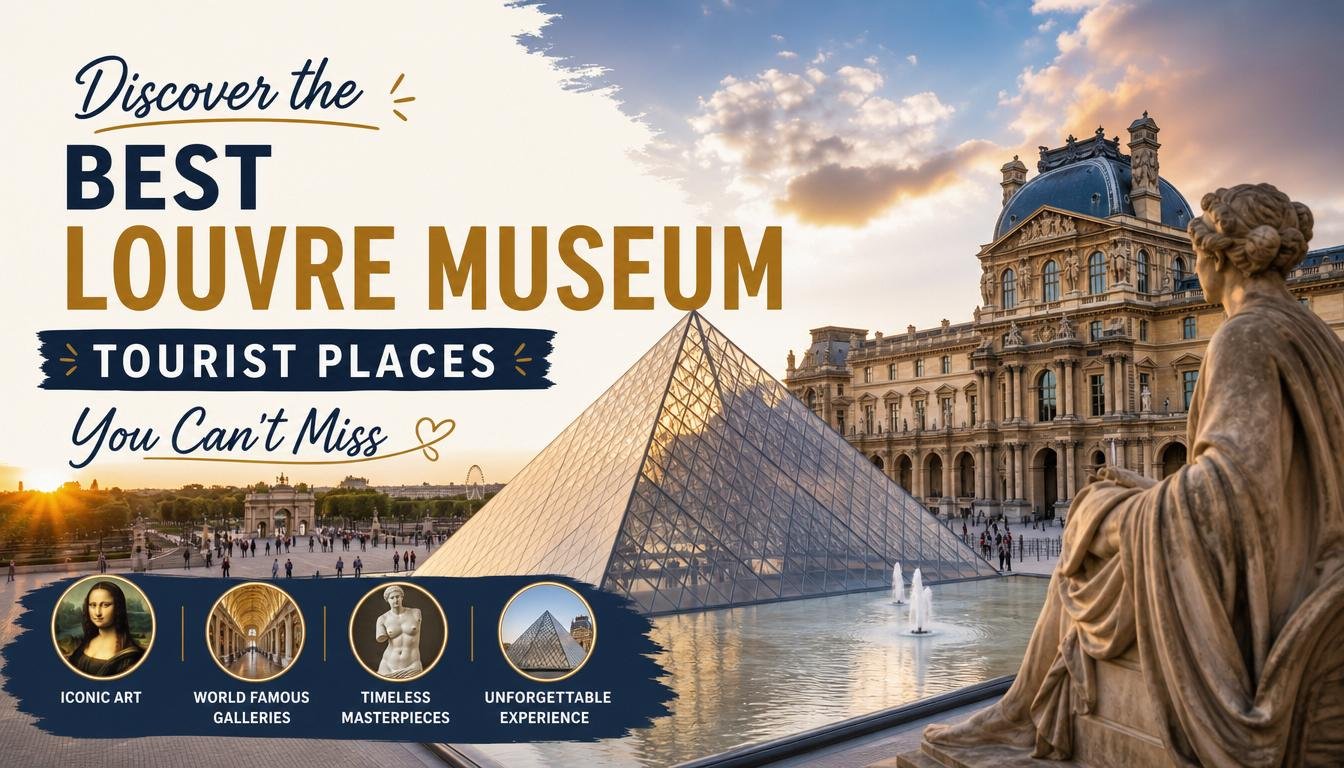
If you’re planning a trip to Paris, the Louvre Museum tourist places should top your must-visit list. As the world’s largest and most visited art museum, the Louvre isn’t just a building it’s a cultural treasure trove filled with centuries of human creativity, history, and architectural brilliance. From iconic masterpieces to hidden galleries, the Louvre offers an unforgettable journey through art, civilization, and imagination. Whether you’re a first-time visitor or a seasoned traveler, knowing which Louvre Museum tourist places to prioritize can transform your experience from overwhelming to extraordinary.
This guide dives deep into the most captivating sections, exhibits, and experiences within the Louvre, helping you navigate its vast halls with confidence. We’ll spotlight must-see artworks, architectural highlights, and lesser-known gems that make the Louvre a true global icon. By the end, you’ll have a clear roadmap to maximize your visit and truly appreciate why the Louvre remains the crown jewel of museums worldwide.
Why the Louvre Museum Is a Must-Visit Destination
The Louvre Museum isn’t just another stop on the Paris itinerary it’s a pilgrimage site for art lovers, history buffs, and culture seekers. Housing over 38,000 objects across eight curatorial departments, the museum spans more than 72,000 square meters. Its origins date back to the 12th century as a medieval fortress, evolving into a royal palace before becoming a public museum in 1793. Today, it stands as a symbol of France’s artistic legacy and global cultural influence.
What sets the Louvre apart is not just its size, but the sheer quality and diversity of its collection. From ancient Egyptian relics to Renaissance masterpieces, the museum offers a chronological journey through human creativity. The Louvre’s reputation as a premier tourist destination is reinforced by its central location on the Right Bank of the Seine, making it easily accessible and surrounded by other Parisian landmarks like the Tuileries Garden and Palais Royal.
For travelers, the Louvre represents more than sightseeing it’s an immersive experience. The museum’s blend of historical architecture, world-class art, and modern visitor services creates a unique environment where education and inspiration meet. Whether you’re drawn to the enigmatic smile of the Mona Lisa or the grandeur of Napoleon III’s apartments, the Louvre delivers moments that linger long after your visit.
Top Louvre Museum Tourist Places to Explore
With so much to see, it’s essential to focus on the Louvre Museum tourist places that offer the most impact. Here are the standout areas and exhibits you shouldn’t miss:
- Denon Wing – The Mona Lisa and Italian Masterpieces: Home to Leonardo da Vinci’s iconic painting, this wing also features works by Raphael, Michelangelo, and Botticelli. The Salle des États, where the Mona Lisa is displayed, draws massive crowds, so plan to arrive early or use timed-entry tickets.
- Richelieu Wing – Napoleon III Apartments: Step into 19th-century French opulence with gilded ceilings, velvet drapes, and ornate furniture. These lavishly decorated rooms offer a glimpse into imperial life and are a favorite among architecture and design enthusiasts.
- Sully Wing – Egyptian Antiquities: One of the world’s largest collections of ancient Egyptian artifacts, including mummies, sarcophagi, and the famous Seated Scribe. The Sully Wing’s ground floor is a treasure trove for history lovers.
- Islamic Art Gallery: Housed under the iconic glass dome designed by architect Rudy Ricciotti, this space showcases over 3,000 works from the 7th to the 19th centuries, including ceramics, textiles, and metalwork from across the Islamic world.
- Venus de Milo and the Greek Antiquities: Located in the Sully Wing, this ancient Greek sculpture from 130 BCE is one of the Louvre’s most celebrated pieces. The surrounding galleries display classical sculptures, vases, and architectural fragments.
- Winged Victory of Samothrace: Perched dramatically at the top of the Daru staircase in the Denon Wing, this Hellenistic sculpture of Nike, the goddess of victory, is a breathtaking centerpiece that captures motion and emotion in marble.
Each of these Louvre Museum tourist places offers a unique lens into different eras, cultures, and artistic movements. Prioritizing them ensures you experience the museum’s highlights without feeling overwhelmed by its scale.
Hidden Gems: Lesser-Known Louvre Museum Tourist Places
While the Mona Lisa and Venus de Milo draw the crowds, the Louvre is full of quieter, equally fascinating spots. These hidden gems offer a more intimate experience and often reveal surprising stories behind the art.
The Medieval Louvre
Beneath the modern museum lies the original 12th-century fortress foundation. Accessible via the Sully Wing, the Medieval Louvre exhibit features excavated walls, moats, and artifacts that tell the story of Paris’s earliest defenses. It’s a powerful reminder that the Louvre’s history predates its art by centuries.
The Galerie d’Apollon
This restored 17th-century royal gallery, once the heart of the Sun King’s art collection, is a masterpiece of Baroque design. With its vaulted ceiling painted by Charles Le Brun and displays of French crown jewels, it’s a dazzling example of royal splendor.
The Cour Carrée and Cour Napoléon
While not indoor exhibits, these courtyards are essential Louvre Museum tourist places. The Cour Carrée, with its symmetrical Renaissance architecture, offers a peaceful retreat. The Cour Napoléon, dominated by I.M. Pei’s glass pyramid, is a modern architectural marvel that contrasts beautifully with the historic palace.
The Pavillon de l’Horloge
Home to the museum’s administrative offices, this elegant pavilion features a clock tower and beautifully restored interiors. Though not always open to the public, special tours sometimes allow access, offering a behind-the-scenes look at the Louvre’s operations.
Exploring these lesser-known areas adds depth to your visit, allowing you to appreciate the Louvre not just as a museum, but as a living, evolving institution.
Navigating the Louvre: Tips for a Smooth Visit
The Louvre’s size can be daunting, but with smart planning, you can make the most of your time. Here are essential tips to enhance your experience:
- Buy Tickets in Advance: Skip the long lines by purchasing timed-entry tickets online. The official Louvre website offers the most reliable booking system.
- Use the Museum Map: Download the free Louvre app or pick up a physical map at the entrance. The museum is divided into three main wings Denon, Richelieu, and Sully each with distinct themes.
- Start Early or Visit Late: The Louvre opens at 9 AM and closes at 6 PM (9 PM on Wednesdays and Fridays). Mornings are less crowded, while evening visits offer a more relaxed atmosphere.
- Wear Comfortable Shoes: You’ll be walking a lot comfortable footwear is a must. The museum covers over 72,000 square meters, and distances between exhibits can be significant.
- Take Breaks: Use the museum’s cafés and lounges to rest. The Café Marly, with its view of the pyramid, is a popular spot for a coffee break.
- Join a Guided Tour: Audio guides and expert-led tours can provide context and stories that enrich your understanding of the artworks.
By planning ahead and using these strategies, you’ll avoid common pitfalls and enjoy a more focused, enjoyable visit to the Louvre Museum tourist places.
Art and Architecture: The Heart of the Louvre Experience
The Louvre is more than a collection of paintings and sculptures it’s a masterpiece of architecture in its own right. The building’s evolution from fortress to palace to museum reflects centuries of French history and design innovation.
The Glass Pyramid
Designed by I.M. Pei and completed in 1989, the glass pyramid serves as the main entrance and a symbol of modern Paris. Its geometric clarity contrasts with the classical façades of the palace, creating a dialogue between old and new. Beneath the pyramid, the underground lobby houses ticket counters, shops, and access to all three wings.
The Richelieu Wing’s Grand Staircase
This opulent staircase, adorned with marble columns and gilded details, leads to the Napoleon III Apartments. It’s a stunning example of 19th-century interior design and a favorite photo spot for visitors.
The Denon Wing’s Grand Gallery
Stretching over 400 meters, this long gallery was once used to display royal art collections. Today, it houses Italian and French paintings from the 13th to the 19th centuries, including works by Caravaggio and Veronese. The high ceilings and natural light create a majestic atmosphere.
Every corner of the Louvre tells a story not just through its art, but through its very structure. The interplay of light, space, and design enhances the visitor experience, making the museum itself a work of art.
Cultural Significance: Why the Louvre Matters
The Louvre isn’t just a tourist attraction it’s a cultural institution with global influence. Its collection spans civilizations, from Mesopotamia to modern Europe, offering a comprehensive view of human achievement.
The museum plays a vital role in art preservation, education, and research. It collaborates with institutions worldwide on conservation projects and hosts temporary exhibitions that bring contemporary voices into dialogue with historical works.
For France, the Louvre is a source of national pride. It represents the country’s commitment to culture, education, and openness. For the world, it’s a shared heritage site where people of all backgrounds can connect through art.
Visiting the Louvre is more than checking a box on a travel list it’s participating in a global conversation about beauty, history, and humanity. The Louvre Museum tourist places are not just destinations; they are gateways to understanding our collective past and inspiring our future.
Key Takeaways
- The Louvre Museum is home to some of the world’s most famous artworks, including the Mona Lisa, Venus de Milo, and Winged Victory of Samothrace.
- Key Louvre Museum tourist places include the Denon Wing (Italian masterpieces), Richelieu Wing (Napoleon III Apartments), and Sully Wing (Egyptian antiquities).
- Hidden gems like the Medieval Louvre, Galerie d’Apollon, and Cour Carrée offer quieter, equally enriching experiences.
- Planning ahead with advance tickets, maps, and comfortable shoes can significantly improve your visit.
- The Louvre’s architecture, from the glass pyramid to the grand staircases, is as impressive as its art collection.
- As a cultural institution, the Louvre preserves and shares humanity’s artistic legacy with millions of visitors each year.
FAQ
What are the most famous Louvre Museum tourist places?
The most famous Louvre Museum tourist places include the Mona Lisa in the Denon Wing, the Venus de Milo in the Sully Wing, and the Winged Victory of Samothrace on the Daru staircase. The Napoleon III Apartments in the Richelieu Wing and the Islamic Art Gallery are also highly recommended.
How much time should I spend at the Louvre?
Most visitors spend between 3 to 5 hours exploring the Louvre. To see the highlights comfortably, plan for at least half a day. If you want to explore in-depth or visit special exhibitions, a full day is ideal.
Is the Louvre worth visiting even if I’m not an art lover?
Absolutely. The Louvre offers more than art its architecture, history, and cultural significance appeal to a wide range of interests. From ancient artifacts to royal apartments, there’s something for everyone, making it one of the most rewarding tourist experiences in Paris.

