

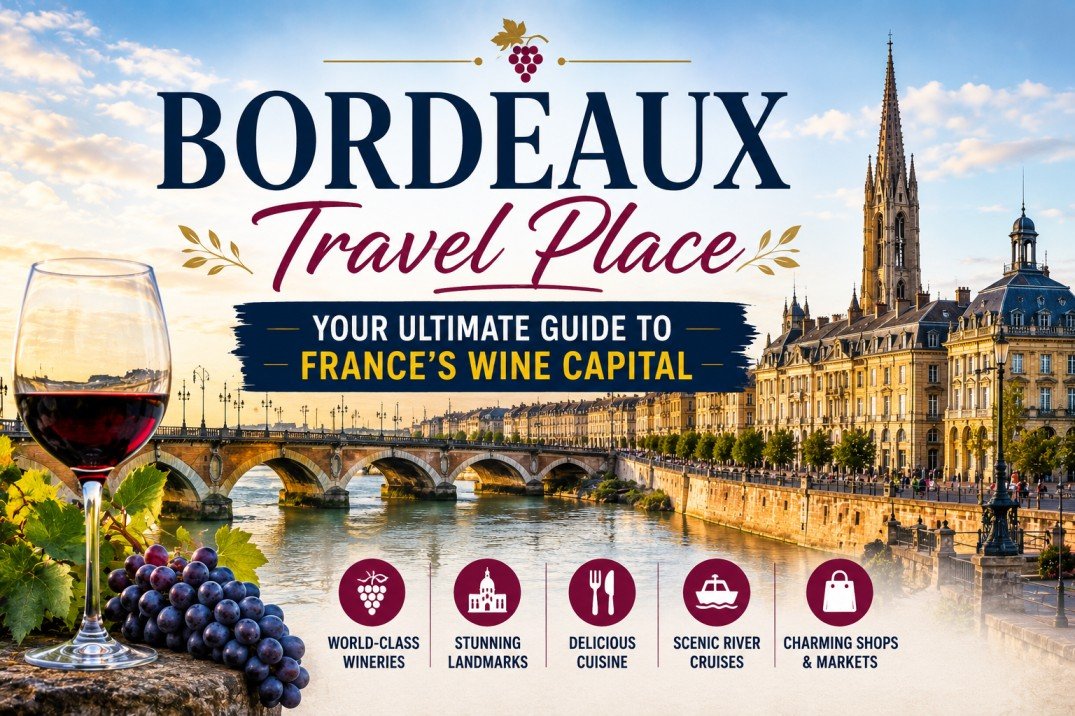
If you’re searching for a Bordeaux travel place that blends rich history, world-class wine, and elegant European charm, you’ve landed in the right city. Nestled along the Garonne River in southwestern France, Bordeaux isn’t just a destination it’s an experience. From its UNESCO-listed historic center to its sprawling vineyards and gourmet cuisine, Bordeaux offers travelers a sophisticated yet welcoming atmosphere. Whether you’re a wine enthusiast, a history buff, or simply craving a romantic getaway, this city delivers on every front.
Known globally as the wine capital of the world, Bordeaux is more than just bottles and cellars. It’s a living, breathing cultural hub where 18th-century architecture meets modern innovation. With over 57 appellations and thousands of châteaux, the region produces some of the finest wines on the planet. But beyond the vines, Bordeaux boasts vibrant markets, riverside promenades, and a thriving arts scene. This guide dives deep into what makes Bordeaux a must-visit travel destination covering top attractions, hidden gems, wine tours, and practical travel tips.
Why Bordeaux Is the Perfect Travel Place for Wine Lovers
Bordeaux’s reputation as a premier wine region is well-earned. The city and its surrounding countryside are home to legendary estates like Château Margaux, Château Latour, and Château Pétrus. But you don’t need to be a sommelier to appreciate the magic here. Wine tastings are accessible, educational, and often hosted in stunning châteaux with centuries of history.
The region’s unique terroir a combination of gravelly soil, maritime climate, and river influence creates ideal conditions for growing Cabernet Sauvignon, Merlot, and Sauvignon Blanc. These grapes form the backbone of Bordeaux’s red and white blends, celebrated worldwide for their complexity and aging potential.
For travelers, this means immersive experiences beyond the bottle. Many châteaux offer guided tours, vineyard walks, and food pairings. Some even allow overnight stays in historic manor houses. Whether you’re sipping a bold Saint-Émilion or a crisp Entre-Deux-Mers, every glass tells a story of tradition and craftsmanship.
Top Wine Regions Near Bordeaux
- Médoc & Haut-Médoc: Famous for powerful reds and classified growths like Château Lafite Rothschild.
- Saint-Émilion: A medieval village with UNESCO status and exceptional Merlot-based wines.
- Pomerol: Small but mighty, producing some of the world’s most expensive wines, including Pétrus.
- Graves & Pessac-Léognan: Known for both reds and dry whites, with estates like Château Haut-Brion.
- Sauternes: Renowned for luscious sweet wines made from botrytized grapes.
Exploring Bordeaux’s Historic Center: A UNESCO Gem
Bordeaux’s city center is a masterpiece of urban planning and architectural harmony. Designated a UNESCO World Heritage Site in 2007, the Port de la Lune (Port of the Moon) refers to the crescent-shaped bend of the Garonne River that defines the city’s layout. Strolling through the historic district feels like stepping into a living museum.
The heart of the city is Place de la Bourse, a stunning 18th-century square flanked by symmetrical buildings and mirrored by the Miroir d’Eau (Water Mirror). This reflecting pool, the largest of its kind in the world, creates a dreamy illusion, especially at sunset. It’s a favorite spot for locals and tourists alike.
Just a short walk away, the Saint-André Cathedral and the adjacent Palais Rohan showcase Gothic and neoclassical styles. The cathedral’s astronomical clock, still functioning after 300 years, is a marvel of engineering. Meanwhile, the Palais Rohan now houses the city’s fine arts museum, featuring works by Rubens, Delacroix, and local artists.
Must-Visit Landmarks in Bordeaux
- La Cité du Vin: An architectural marvel dedicated to global wine culture, with interactive exhibits and a panoramic tasting room.
- Quai des Marques: A lively riverside market with local food, crafts, and wine tastings.
- Jardin Public: A peaceful green space perfect for a picnic or a stroll, with a small lake and botanical garden.
- Basilique Saint-Michel: Known for its colorful bell tower and vibrant Sunday market.
- Rue Sainte-Catherine: Europe’s longest pedestrian shopping street, lined with boutiques, cafés, and historic façades.
Bordeaux by the River: Scenic Views and Riverfront Activities
The Garonne River is the lifeblood of Bordeaux, shaping its geography, economy, and culture. A walk along the Quai Louis XVIII or the Quai de la Douane offers breathtaking views of the city skyline, especially when illuminated at night. The riverbanks are lined with cafés, bistros, and outdoor seating ideal for a glass of local wine as the sun sets.
For a unique perspective, take a river cruise. Several companies offer daytime and evening tours, some with commentary on Bordeaux’s history and architecture. Sunset cruises are particularly popular, often paired with champagne or a light dinner.
Adventure seekers can rent kayaks or paddleboards to explore the river at their own pace. The calm waters make it accessible for beginners, and guided tours are available for those who want to learn about the river’s ecology and history.
During summer, the Bordeaux Fête le Vin festival transforms the riverfront into a celebration of wine, music, and food. Held every two years, this event draws thousands of visitors for tastings, boat parades, and fireworks over the Garonne.
Food & Dining: A Culinary Journey in Bordeaux
Bordeaux isn’t just about wine it’s a food lover’s paradise. The city’s cuisine reflects its terroir: rich, hearty, and deeply flavorful. Local specialties include entrecôte à la bordelaise (ribeye steak with red wine sauce), cèpes à la bordelaise (mushrooms cooked in wine), and canelés small caramelized pastries with a custard center.
For an authentic experience, visit Marché des Capucins, Bordeaux’s largest covered market. Here, you’ll find fresh seafood, artisanal cheeses, charcuterie, and seasonal produce. Many vendors offer tastings, and several on-site restaurants serve market-fresh dishes at affordable prices.
Fine dining is also a highlight. Bordeaux boasts several Michelin-starred restaurants, including Le Pressoir d’Argent by Gordon Ramsay and La Tupina, known for traditional Gascon cuisine. But don’t overlook the bistros and wine bars many offer exceptional food and an extensive selection of local wines by the glass.
Where to Eat in Bordeaux
- Le Petit Commerce: A beloved bistro with fresh seafood and a lively atmosphere.
- Garopapilles: A cozy spot focusing on seasonal, vegetable-forward dishes.
- Max Bordeaux: A modern brasserie with panoramic views of the Garonne.
- La Tupina: Rustic, family-run restaurant serving slow-cooked meats and regional specialties.
- Bar à Vin de la Bourse: A wine bar run by the CIVB (Bordeaux Wine Council), offering expertly curated tastings.
Day Trips from Bordeaux: Vineyards, Villages & Castles
One of the greatest advantages of choosing Bordeaux as your travel base is its proximity to world-famous wine regions and charming villages. A day trip allows you to explore the countryside while staying close to the city’s comforts.
Saint-Émilion is a must-visit, just 45 minutes east of Bordeaux. This medieval hilltop village is surrounded by vineyards and features narrow cobblestone streets, underground monolithic churches, and panoramic views. Many châteaux here offer tours and tastings, and some even have on-site restaurants.
For a more exclusive experience, head to Pomerol or Saint-Julien, where smaller estates produce highly sought-after wines. These areas are less touristy, offering a more intimate glimpse into winemaking traditions.
If you prefer history over vines, visit Blaye, a fortified town with a 17th-century citadel overlooking the Gironde estuary. The Citadel of Blaye, designed by Vauban, is a UNESCO site and offers guided tours with sweeping views of the river.
Another scenic option is Arcachon, a coastal town known for its oyster farms and the towering Dune du Pilat the tallest sand dune in Europe. It’s a bit farther (about 1 hour by car), but perfect for a beach day or seafood lunch.
Getting Around Bordeaux: Transportation Tips
Bordeaux is a compact and walkable city, especially in the historic center. Most major attractions are within a 20-minute walk of each other. However, the city also has an excellent public transportation system, including trams, buses, and bike-sharing.
The TBM network (Transports Bordeaux Métropole) operates three tram lines that connect key areas like Gare Saint-Jean (the main train station), Place de la Bourse, and the university district. A single ticket costs around €1.90, or you can buy a day pass for €5.50.
For eco-friendly travel, rent a V³ bike (Vélopop’) from one of the many docking stations. Bordeaux has over 180 km of bike lanes, making cycling safe and convenient. Electric scooters are also widely available through apps like Lime and Dott.
If you plan to explore the vineyards, renting a car is recommended. Public transport to rural areas is limited, and many châteaux are not accessible by tram or bus. Alternatively, join a guided wine tour many include transportation, tastings, and lunch.
Best Time to Visit Bordeaux
The ideal time to visit Bordeaux depends on your interests. For wine lovers, September and October are magical this is harvest season (vendanges), when vineyards are bustling with activity. Many châteaux offer special events, and the weather is still warm and pleasant.
Summer (June to August) is peak tourist season, with long days, festivals, and outdoor dining. However, it can get crowded, and accommodation prices rise. Spring (April to May) and early autumn (September to October) offer mild weather, fewer crowds, and beautiful foliage.
Winter is quiet but charming, especially during the Christmas markets in December. The city sparkles with lights, and you can enjoy mulled wine and seasonal treats in cozy wine bars.
Accommodation in Bordeaux: Where to Stay
Bordeaux offers a range of accommodations to suit every budget and style. For luxury, consider staying in a boutique hotel in the historic center, such as Yndō Hôtel or La Maison Bord’eaux. These properties blend modern comfort with classic French elegance.
Mid-range travelers will find excellent value in design hotels like Hôtel de Sèze or Les Suites Bord’eaux, which offer stylish rooms and central locations. Many include breakfast and wine tastings.
Budget options include hostels like Les Bains Douches and Generator Bordeaux, which offer clean, social accommodations near the train station. Airbnb is also popular, with apartments ranging from studios to entire lofts.
For a unique experience, book a stay at a château hotel in the countryside. Properties like Château Cordeillan-Bages or Château Pape Clément offer wine-themed luxury, spa services, and gourmet dining.
Key Takeaways: Why Bordeaux Should Be on Your Travel List
- Bordeaux is a world-class wine destination, offering access to legendary châteaux and diverse appellations.
- The historic center is a UNESCO site, filled with elegant architecture, riverside charm, and cultural landmarks.
- Local cuisine shines, with markets, bistros, and fine dining highlighting regional flavors.
- Day trips are easy and rewarding, from medieval villages like Saint-Émilion to coastal escapes like Arcachon.
- Transportation is efficient, with trams, bikes, and car rentals making exploration simple.
- Best visited in spring or autumn for ideal weather and fewer crowds.
Frequently Asked Questions About Bordeaux Travel
What is the best way to experience Bordeaux’s wine culture?
The best way is to combine a visit to the city’s wine museums (like La Cité du Vin) with day trips to nearby châteaux. Many estates offer guided tours and tastings. Booking in advance is recommended, especially for prestigious domains.
Is Bordeaux expensive for travelers?
Bordeaux offers options for all budgets. While fine dining and luxury hotels can be pricey, there are many affordable bistros, markets, and hostels. Public transportation is inexpensive, and many attractions are free or low-cost.
Do I need to speak French to enjoy Bordeaux?
While French is the primary language, many locals especially in tourism speak English. Learning a few basic phrases (like “bonjour” and “merci”) is appreciated and enhances the experience.
Final Thoughts: Bordeaux Awaits
Bordeaux is more than a travel destination it’s a sensory journey through history, flavor, and beauty. Whether you’re sipping a glass of Margaux in a sun-drenched vineyard, wandering the mirrored streets of the old town, or savoring a canelé by the river, every moment in Bordeaux feels intentional and rich with meaning.
As a Bordeaux travel place, it stands out not just for its wine, but for its ability to blend tradition with modernity, elegance with accessibility. It’s a city that invites you to slow down, savor the moment, and discover something new with every visit.
So pack your bags, bring your curiosity, and let Bordeaux surprise you. Whether it’s your first trip or your fifth, this French gem continues to inspire and delight.

