

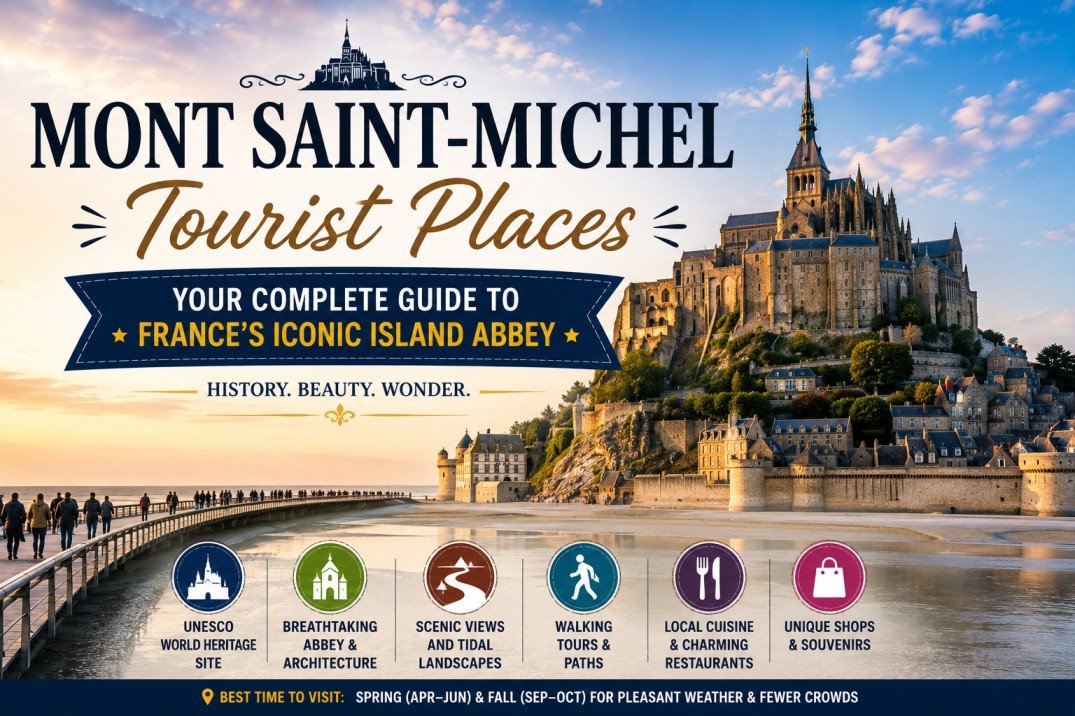
Imagine a medieval abbey rising dramatically from a tidal island, crowned by golden spires that seem to touch the clouds. This is Mont Saint-Michel one of France’s most breathtaking and visited landmarks. If you’re searching for Mont Saint-Michel tourist places, you’re not just looking for a photo opportunity. You’re seeking history, culture, and natural wonder all in one unforgettable destination. Nestled off the coast of Normandy in northwestern France, Mont Saint-Michel is more than a UNESCO World Heritage Site it’s a living monument where centuries of faith, architecture, and maritime tradition converge.
Whether you’re a history buff, a photography enthusiast, or simply craving a unique travel experience, Mont Saint-Michel offers a wealth of attractions beyond the main abbey. From charming cobblestone streets to panoramic viewpoints, tidal flats, and nearby coastal gems, there’s much to explore. This guide dives deep into the must-see spots around Mont Saint-Michel, ensuring you don’t miss a single highlight during your visit.
Why Mont Saint-Michel Is a Must-Visit Destination
Mont Saint-Michel isn’t just another pretty landmark it’s a masterpiece of human ingenuity and natural beauty. Perched on a rocky island just 600 meters from the mainland, the site has been a place of pilgrimage since the 8th century. Its strategic location and dramatic tides among the highest in Europe make it a natural fortress and a symbol of spiritual resilience.
The abbey itself, built between the 11th and 16th centuries, blends Romanesque and Gothic architecture in a way few European sites can match. But the magic doesn’t stop at the monastery walls. The surrounding village, tidal landscape, and nearby coastal towns add layers of depth to any visit. Whether you’re walking across the tidal causeway at low tide or watching the island emerge from the sea at high tide, Mont Saint-Michel delivers a sensory experience unlike any other.
Top Mont Saint-Michel Tourist Places to Explore
1. The Abbey of Mont Saint-Michel
The crown jewel of the island, the Abbey of Mont Saint-Michel is the primary reason most visitors come. This Benedictine abbey has stood for over a thousand years and remains one of the most impressive religious structures in Europe. As you climb the winding stone steps, you’ll pass through cloisters, refectories, and the stunning La Merveille a three-story building housing the monks’ dormitory, scriptorium, and guest hall.
Highlights include the Gothic-style church with its golden statue of the Archangel Michael, the panoramic terrace offering sweeping views of the bay, and the underground crypts that reveal the island’s layered history. Guided tours are available in multiple languages and provide fascinating insights into monastic life, medieval construction techniques, and the abbey’s role in European history.
2. The Medieval Village (La Cité)
Below the abbey lies the charming medieval village of La Cité, a maze of narrow streets, stone houses, and artisan shops. This is where pilgrims and visitors have gathered for centuries, and today it’s bustling with cafes, souvenir stores, and historic inns. Walking through La Cité feels like stepping back in time wooden doors, flower boxes, and the scent of freshly baked gaufres (waffles) fill the air.
Don’t miss the Grande Rue, the main thoroughfare lined with traditional Norman architecture. Here, you’ll find local specialties like moules de bouchot (mussels), tripes à la mode de Caen, and calvados-infused desserts. Several family-run restaurants offer authentic Norman cuisine with a view of the abbey perfect for a leisurely lunch.
3. The Tidal Causeway and Bridge
One of the most iconic images of Mont Saint-Michel is the long causeway connecting the island to the mainland. Originally a simple path, it was replaced in 2014 by a modern, elevated bridge designed to preserve the natural tidal flow. The new structure allows visitors to walk or take a shuttle bus to the island without disrupting the ecosystem.
Walking across the bridge at low tide offers a unique perspective of the bay. You’ll see the vast sandy flats stretching out in all directions, dotted with grazing sheep and migratory birds. At high tide, the island appears to float on the water a breathtaking sight best captured from the nearby Pointe du Grouin or the Mont-Saint-Michel Bay Observatory.
4. The Mont-Saint-Michel Bay
The bay surrounding Mont Saint-Michel is a natural wonder in its own right. With tides rising and falling by up to 14 meters the highest in Europe the landscape transforms dramatically throughout the day. At low tide, you can walk or bike across the sand to nearby islands like Chausey or explore the Îles aux Moines.
For a truly immersive experience, join a guided marche pieds nus (barefoot walk) across the tidal flats. These eco-friendly tours, led by local guides, teach you about the bay’s unique ecosystem, including rare birds, seaweed, and marine life. It’s a peaceful, meditative way to connect with nature and a favorite among eco-tourists.
5. The Mont-Saint-Michel Bay Observatory
Located on the mainland just a few kilometers from the island, the Mont-Saint-Michel Bay Observatory (Observatoire du Mont-Saint-Michel) offers panoramic views of the abbey and the surrounding bay. This modern visitor center features interactive exhibits, telescopes, and live tidal data displays that help you understand the science behind the tides.
The observatory also hosts photography workshops and astronomy events during the summer months. From its elevated terrace, you can watch the sun set behind the abbey or observe the stars above the bay a magical experience for night sky enthusiasts.
6. The Ramparts and Defensive Walls
Mont Saint-Michel’s strategic importance is evident in its fortified walls and ramparts. Built during the Hundred Years’ War to defend against English attacks, these structures showcase medieval military architecture. Walking along the ramparts gives you a bird’s-eye view of the village, the abbey, and the bay below.
Several sections of the wall are open to the public, including the Tour de l’Échauguette and the Grand Degré a steep staircase leading directly to the abbey entrance. These areas are less crowded than the main village, making them ideal for quiet reflection and photography.
7. The Mont Saint-Michel Museum
Tucked inside the abbey complex, the Mont Saint-Michel Museum (Musée de Mont-Saint-Michel) houses a rich collection of religious artifacts, historical documents, and archaeological finds. Exhibits cover the island’s transformation from a pagan site to a Christian sanctuary, its role in the Norman conquest, and its evolution into a tourist destination.
Highlights include medieval manuscripts, stained glass fragments, and models of the abbey through the ages. The museum also features a short film that provides context for first-time visitors, making it a great starting point before exploring the site.
Nearby Attractions Worth Visiting
While Mont Saint-Michel is the main draw, the surrounding region offers equally compelling destinations. A short drive or train ride away, you’ll find charming towns, historic castles, and scenic coastlines that enhance your overall experience.
Avranches
Just 10 kilometers from Mont Saint-Michel, the hilltop town of Avranches offers stunning views of the bay and the abbey. Known for its botanical gardens and medieval cathedral ruins, Avranches is a peaceful retreat with a rich literary history. The town was once home to the famous French poet Paul Valéry and features a museum dedicated to his life and work.
Don’t miss the Jardin des Plantes, a beautifully landscaped garden with exotic plants and a panoramic terrace overlooking the bay. It’s the perfect spot for a quiet stroll or a picnic with a view.
Saint-Malo
About 50 kilometers west of Mont Saint-Michel, Saint-Malo is a fortified port city known for its pirate past and dramatic coastal scenery. The walled old town, or Intra-Muros, is a maze of cobbled streets, seafood restaurants, and historic ramparts. From the walls, you can see the sea crashing against the rocks and the famous Fort National just offshore.
Saint-Malo is also a gateway to the Emerald Coast (Côte d’Émeraude), a stretch of coastline dotted with sandy beaches, cliffs, and seaside villages. It’s ideal for a day trip or an overnight stay if you want to extend your Normandy adventure.
Brittany’s Emerald Coast
The Emerald Coast lives up to its name with turquoise waters, rocky coves, and lush green cliffs. Towns like Dinard and Saint-Cast-le-Guildo offer luxury resorts, golf courses, and sailing opportunities. Dinard, in particular, is known for its Belle Époque architecture and upscale boutiques.
For nature lovers, the Cap Fréhel peninsula offers dramatic cliffside hikes and views of bird colonies on the nearby Île des Landes. It’s a great way to balance the cultural richness of Mont Saint-Michel with outdoor adventure.
Best Time to Visit Mont Saint-Michel
The ideal time to visit Mont Saint-Michel depends on your priorities. Summer (June to August) offers warm weather and long daylight hours, but also peak crowds. If you prefer a quieter experience, consider visiting in spring (April to May) or early autumn (September to October), when the weather is still pleasant and the tourist numbers are lower.
For a truly unique experience, plan your visit around a super tide (marée exceptionnelle) when the tidal range is at its maximum. These events, which occur a few times a year, transform the bay into a vast expanse of water, making the island appear completely surrounded. Check the official Mont Saint-Michel website for tide schedules and special events.
Tips for Visiting Mont Saint-Michel
To make the most of your trip, keep these practical tips in mind:
- Book tickets in advance: The abbey often sells out during peak season. Reserve your entry online to skip the lines.
- Wear comfortable shoes: The island is hilly and cobblestoned good walking shoes are essential.
- Check the tide times: Plan your visit around low tide to walk across the flats, or high tide for the most dramatic views.
- Use the free shuttle: Parking is limited and expensive. Take the Passeur shuttle bus from the mainland parking lot to the island.
- Respect the environment: The bay is a protected natural site. Avoid walking on fragile dunes or disturbing wildlife.
Key Takeaways
- Mont Saint-Michel is a UNESCO World Heritage Site and one of France’s most iconic landmarks.
- The abbey, medieval village, tidal bay, and nearby towns offer a rich mix of history, culture, and natural beauty.
- Top attractions include the Abbey of Mont Saint-Michel, La Cité village, the tidal causeway, and the Mont-Saint-Michel Bay Observatory.
- Nearby destinations like Avranches, Saint-Malo, and the Emerald Coast enhance the travel experience.
- Visit during spring or autumn for fewer crowds, and check tide schedules for the best views.
FAQ
How do I get to Mont Saint-Michel?
Mont Saint-Michel is accessible by car, train, or bus. The nearest major city is Rennes, about 1 hour away by car. From Paris, take a high-speed TGV train to Rennes or Pontorson, then a shuttle or taxi to the site. Free parking is available on the mainland, with shuttle service to the island.
Is Mont Saint-Michel worth visiting?
Absolutely. Mont Saint-Michel offers a unique blend of history, architecture, and natural wonder. Whether you’re exploring the abbey, walking the tidal flats, or enjoying local cuisine, it’s a destination that leaves a lasting impression.
Can you stay overnight on Mont Saint-Michel?
Yes, but options are limited. A few historic inns and guesthouses operate within the village, offering a truly immersive experience. Book well in advance, especially during peak season. Alternatively, stay in nearby towns like Avranches or Pontorson for more choices and easier access.
Final Thoughts
Mont Saint-Michel isn’t just a tourist destination it’s a journey through time, faith, and nature. From the towering abbey to the whispering tides, every corner of this island tells a story. Whether you’re drawn by its spiritual legacy, architectural grandeur, or the raw beauty of the bay, Mont Saint-Michel delivers an experience that’s both awe-inspiring and deeply human.
So pack your camera, lace up your walking shoes, and prepare to be enchanted. The Mont Saint-Michel tourist places await ready to reveal their secrets to those who seek them.

